
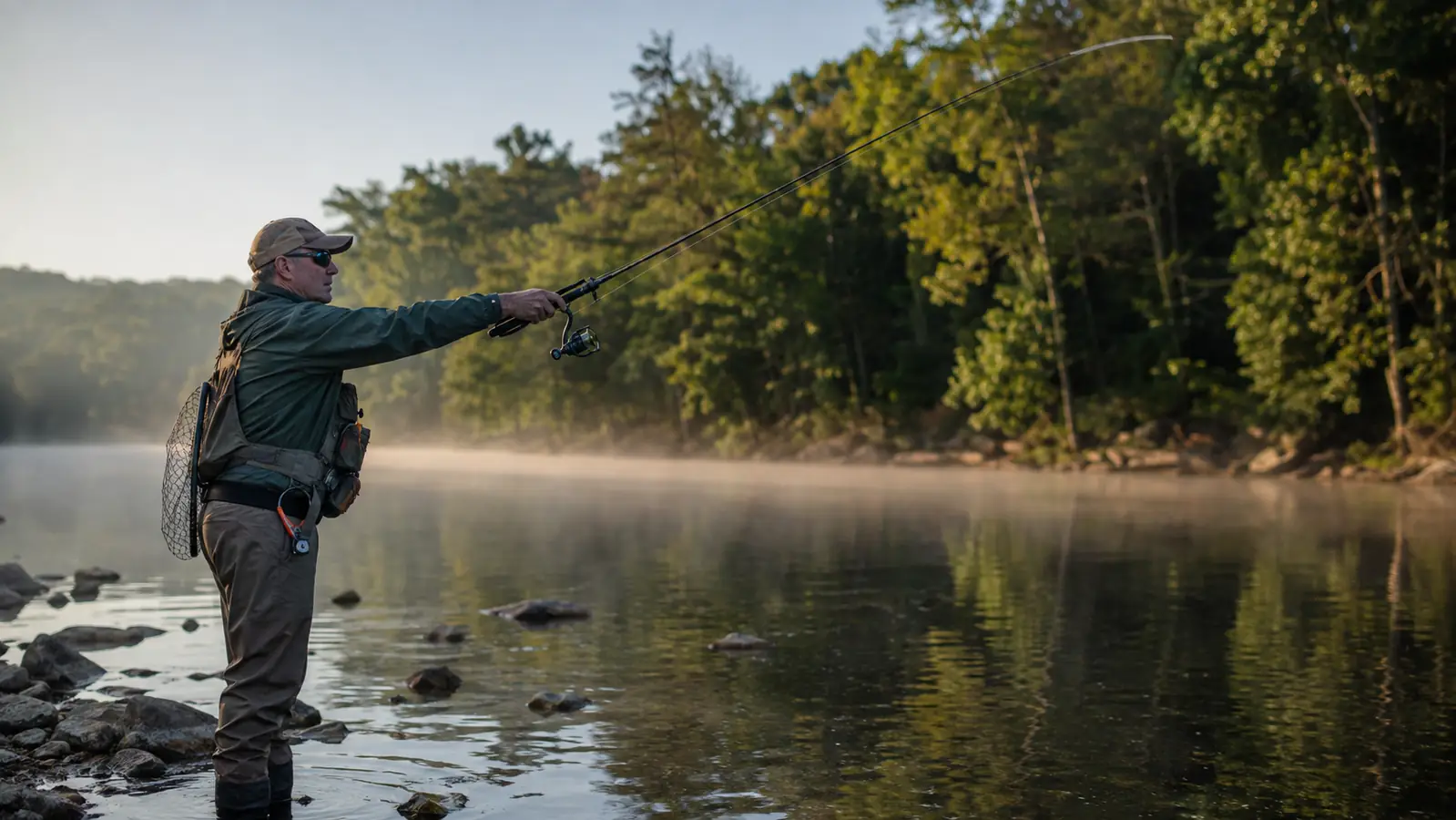
The first time I handed my PLUSINNO telescopic combo to my buddy Ray on the bank of the Current River, he snapped it back like it was his old one-piece rod and came within a foot of throwing the top section into the water. That is the catch with a telescopic rod. Once you extend it, it looks like any other spinning outfit, but it does not load like one. Cast it hard the way you would a one-piece and you get wind knots, line loops, and that sideways wobble that sets the lure down ten feet off target. Cast it the way it wants to be cast, and you get clean loops, no tangles, and more distance than a rod that packs down to a foot and a half has any business throwing.
I have been casting rods for forty years, most of them one-piece and most of them in the brush along small rivers. So switching to a multi-section blank meant unlearning a few habits I did not even know I had. This is the step-by-step I settled on after a season of bank fishing smallmouth and a bunch of evenings on the lake chasing crappie. It is five steps, and step four is the one that fixed my casting more than the other four put together.
Start With a Combo That Packs and Casts
The PLUSINNO telescopic rod and reel combo is the outfit I practiced these casts with all season. It packs into a four-wheeler box and still throws far enough to reach the far bank.
Amazon Check Today's Price on Amazon →Why a Telescopic Blank Casts Different
A one-piece rod is one continuous blank, so when you cast, the bend travels from the butt all the way to the tip in one smooth wave. A telescopic rod is five or six sections joined by ferrules, and every one of those joints is a spot where the blank is slightly stiffer and slightly less smooth. The result is a rod that has more flex in the middle and the tip than a one-piece of the same length. That is great for feeling a light bite, but it means the rod loads and unloads a little slower, and it punishes a fast, hard cast with a wobbly tip.
That is not a flaw in the rod. It is a difference in how you have to cast it. Think of it like casting a fly rod against a baitcaster, or like throwing a football with a flick instead of a full-arm heave. Same idea here. The PLUSINNO, with its carbon fiber blank, actually has a nice moderate action once you slow down, and it can throw surprisingly far when you let it load instead of fighting it.
Step 1: Seat Every Section Before the First Cast
Telescopic rods come apart in sections, and every joint is a place where the blank can flex wrong. If a section is not fully seated, the rod loads right at that ferrule instead of down through the whole blank, and you feel it as a floppy spot that turns your cast into a lob. So before anything else, I extend each section slowly and push it firmly into the one below it with a slight twist as it seats. You are not forcing it. You are just making sure it is home.
On the PLUSINNO I work from the butt toward the tip, which seats each joint against the one below instead of fighting it. When the rod is fully extended, I hold it by the butt and give it a little shake. If you hear a click or feel any slop, one section is not home. Twist it a quarter turn and seat it again. Thirty seconds here saves a whole day of casting garbage, and it is the step almost nobody does.
Step 2: Set the Spool and Pin the Line With Your Index Finger
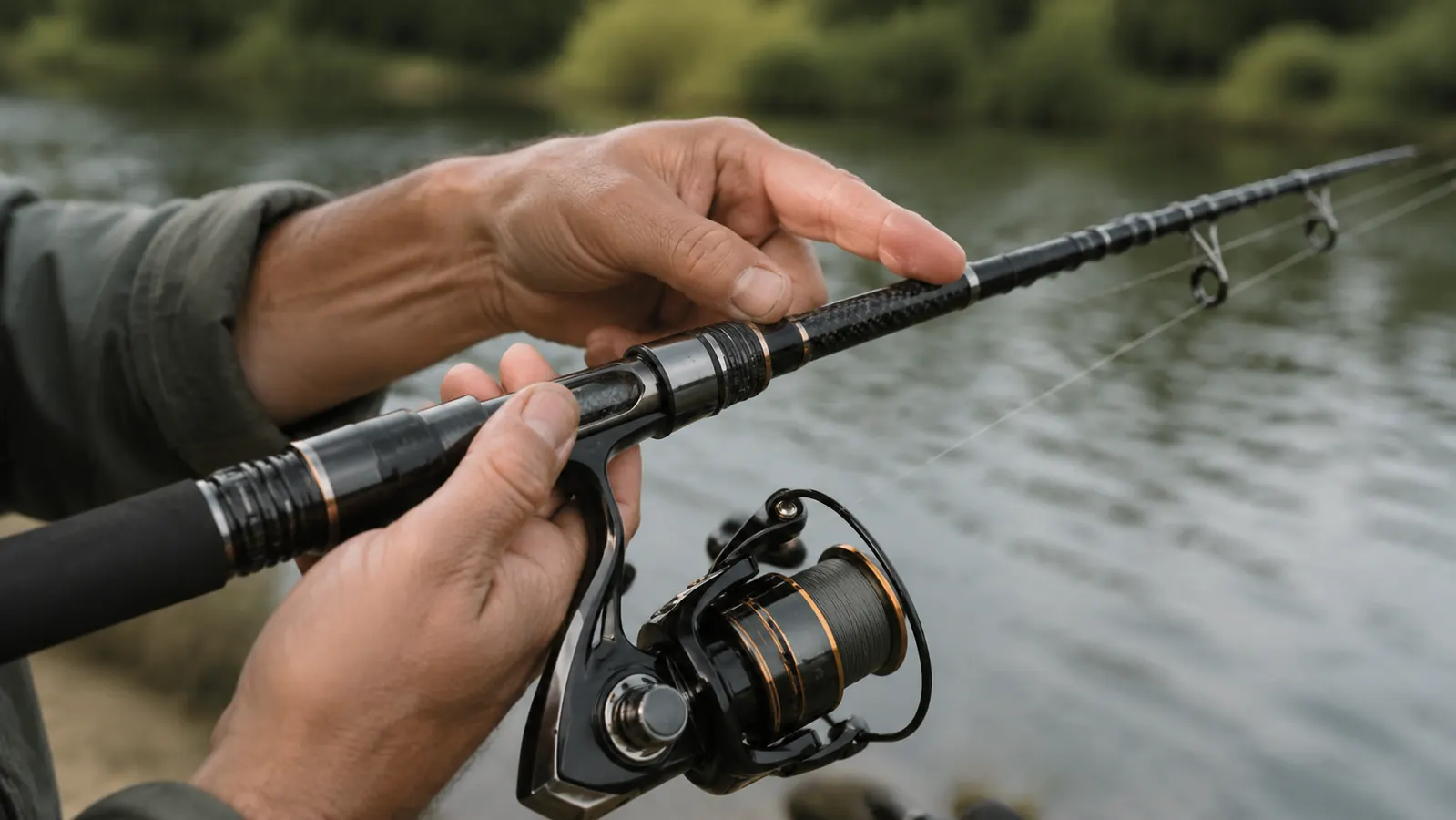
On a spinning reel, your index finger is the line control, and on a telescopic rod it matters even more because the softer blank cannot hide a bad release. Before the first cast I take up slack until the lure hangs about a foot below the tip, then I pinch the line against the rod blank with my index finger and open the bail by hand. That pinch is what lets the line go at the right moment. Get it right and the line comes off the spool in clean loops. Get it wrong, meaning you let go too early or too late, and the loops pile up and you spend ten minutes picking out a wind knot.
The other half of this step is the spool tension. On the PLUSINNO spinning reel, I tighten the front drag just until the spool stops wobbling side to side, then back it off a hair. You want the spool to spin freely, but you do not want it sloppy. A loose spool is the quiet cause of those overruns on spinning gear that everyone blames on the wind. And one more thing: when the cast is over, close the bail by hand, not by cranking the handle. Cranking it with the line under tension is how a fresh twist gets onto the spool.
Step 3: Load the Rod With a Slow Lift, Not a Snap
A one-piece rod you can whip. A telescopic rod, especially one with a carbon fiber blank, wants a slower build. Instead of snapping the rod back, I lift it in a smooth arc and let the weight of the lure bend the rod through the motion. The rod stores that energy and hands it back on the forward stroke. If you rush the load, the flexible mid sections do not have time to catch up, and the tip whips around in a circle instead of tracking a straight line.
The motion I use is a slow pendulum. Back, smooth and steady, until the rod is just past vertical behind me, then a pause long enough to feel the rod loading. That pause is the part most people skip. It is a fraction of a second, but it is the difference between a rod that casts and a rod that just flings. When I slow my backcast down and let the PLUSINNO load, the rod throws tight loops instead of a floppy mess. When I rush it, I get that mushy lob that lands short every time.
Step 4: Release With a Roll, Not a Pop
This is the step that fixed my casting. When I cast my one-piece rod, I popped my wrist at the end of the forward stroke and let the line go all at once. On a telescopic rod, that pop makes the soft tip rebound early, and the line comes off the spool too fast, which is exactly how you get a wind knot a few feet past the rod tip.
Instead, I roll my index finger off the line as the rod passes about the ten o'clock position, and I keep the rod moving through the stroke. The line pulls off the spool because the rod is still accelerating, not because I flipped my finger open. It is a small change, but it is the whole ballgame. Once I stopped popping the release and started rolling it, the PLUSINNO stopped throwing knots and started putting lures where I was looking.
If you feel a sharp snap in your wrist at the end of the cast, that is the pop. Dial it back until the only snap you hear is the lure hitting the water. The roll is a smoother, longer motion, like turning a doorknob, and it keeps the line flowing off the spool at the same speed the rod is moving. That matched speed is what keeps the loop tight all the way to the target.
Step 5: Stop the Rod High and Feather the Line
Where you stop the rod matters more than how hard you cast it. On a smooth cast, I stop the rod around the ten to eleven o'clock position, not down at shoulder height. Stopping high lets the line pull through the guides against the rod's bend, which keeps the loop tight and kills the flutter that makes a lure land short.
The other half of the stop is feathering. As the lure flies, I hold my palm out and let the line brush my fingers just enough to slow the spool a touch. You are not grabbing the line. You are just taking a little speed off so the spool does not overrun when the lure hits the water. On the PLUSINNO, I feather more with a light crappie jig and barely touch the line with a heavier spinner. It is a feel you build after a few dozen casts, and it is the difference between a clean stop and a bird's nest.
The Mistakes That Cost You the Most Distance
After a season of watching other people fish the PLUSINNO out of my box, I can tell you the three mistakes that show up over and over. The first is casting from a rod that is not fully seated, and it is the most common. The second is trying to muscle the cast. A telescopic blank rewards timing, not force. The harder you swing, the more the soft sections flutter, and the shorter the cast comes out. The third is keeping your eye on the lure instead of the target. If you watch the lure, your arm follows your eyes and the rod drops, which kills the high stop that keeps the loop tight.
The fix for all three is the same: slow everything down and let the rod do the work. I tell people to cast like they are trying to be quiet, not like they are trying to be far. Smooth always beats strong with a multi-section blank, and the distance shows up on its own.
What Else Helps
A few things made the whole method easier. First, make sure the guide eyes are lined up. Telescopic sections can twist when you seat them, and if a guide is even a little off line, the line rubs the frame and your distance dies. I check mine by sighting down the blank from the butt before I cast. Second, keep the ferrules clean. A grain of sand in a joint makes the section sit crooked, so I wipe mine with a dry rag after a trip.
Third, match the lure to the rod. A telescopic spinning combo like this one is happiest with lures in the one-eighth to three-eighths ounce range. Throw something much heavier and the soft blank overflexes and the cast falls apart. Fourth, if you run braided line, wet your fingers before you feather. Braid is slicker than mono and will slip right through a dry palm.
And fifth, practice in the yard with a practice plug before you take it to the water. Fifteen minutes of casting at a bucket will teach you the roll release faster than a whole weekend of fishing. Wind is the great enemy of a light telescopic combo, and it brings back all the knots you fixed with a clean release. On a breezy day I drop down a size in lure, keep the cast lower and flatter, and feather the line harder on the stop. If it is really howling, I put the telescopic combo away and grab a heavier rod. Knowing when not to use it is part of casting well with it.
Once I stopped popping the release and started rolling my finger off the line, the PLUSINNO stopped throwing wind knots and started landing lures where I was looking.
If you have a telescopic combo that has been frustrating you, do not give up on it. Seat the sections, slow your backcast down, roll your finger off the line instead of popping it, and stop the rod high. That is the whole method, and it turned my PLUSINNO from a rod I almost threw in the river into the one I grab first when the fishing is close to home.
Practice on a Combo That Packs Away
The PLUSINNO telescopic rod and reel combo has been my practice rod and my backup rod all season. When the fishing is done it goes back in the four-wheeler box, ready for next time.
Amazon Check Today's Price on Amazon →