
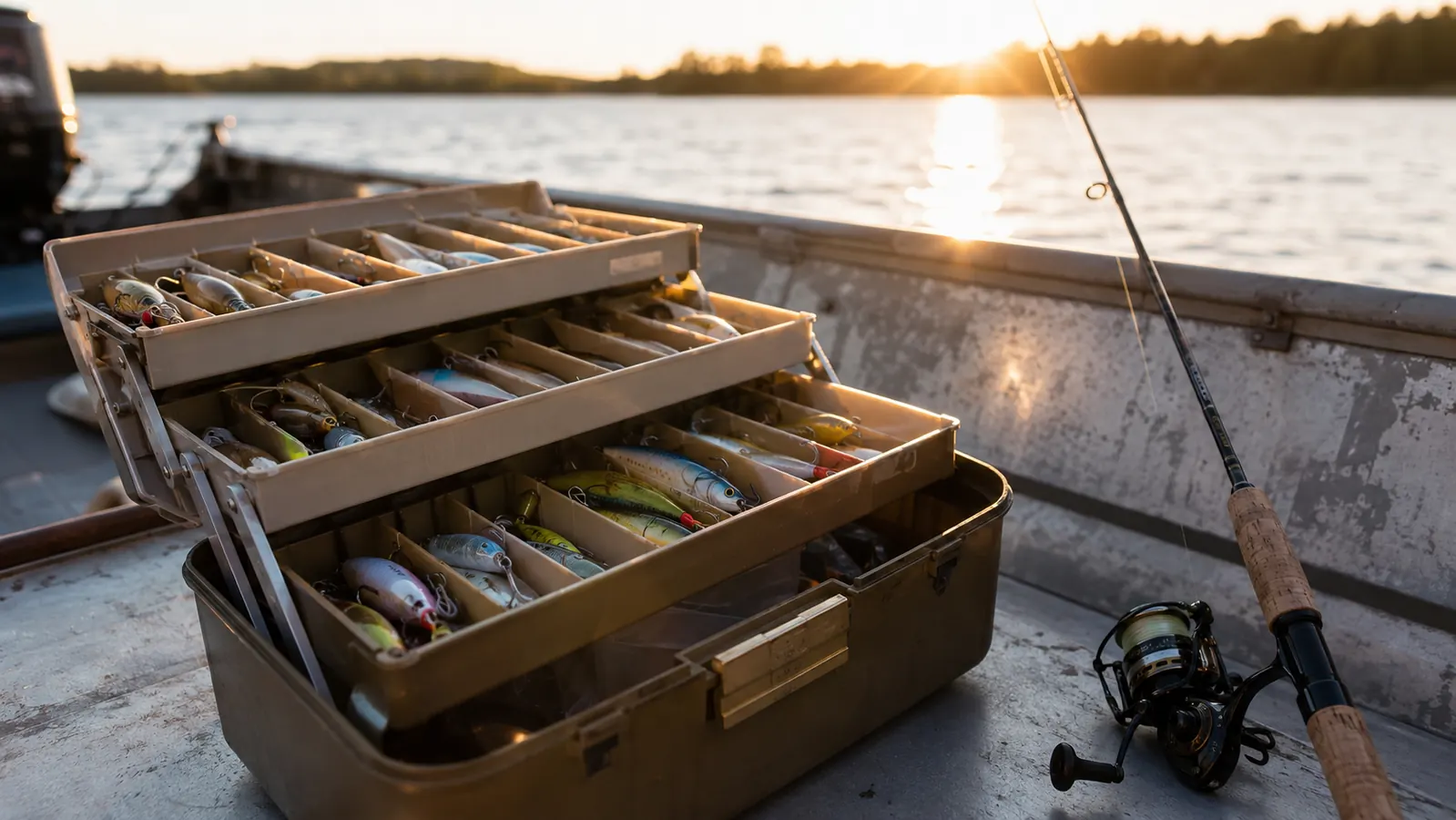
Every angler I know has a tackle box story that ends with hooks and split shot scattered across a boat deck. Mine happened on a March morning on the White River below Bull Shoals, when the latch on an old box let go on the first bump and I spent the best hour of the bite on my knees picking jigs out of the bilge. When I finally got around to replacing it, I did what I do with any gear I am going to trust for a season. I ran the two boxes people argue about side by side. The Plano three-tray tackle box and the Flambeau Stowaway have both been on boat decks and in truck beds for years, and both have a following. Here is the honest version of that argument after a full season with each.
The short answer is that they are different tools, not direct rivals. The Plano three-tray is the better one-box carry for an angler who mixes bulky lures with small terminal tackle and wants something that opens flat, stays put, and takes a beating. The Flambeau Stowaway is the better home for the small stuff when you want a sealed box you can leave out in the weather. I ended up keeping the Plano in the boat and a Stowaway in the truck. Whichever way you lean, the table below lays out the honest differences, and the sections after it tell the story of how they played out on the water.
| Plano Three-Tray | Flambeau Stowaway | |
|---|---|---|
| Latches | Rust-proof brass latch that flips open one-handed, even with cold wet hands. | Twin positive-lock latches that click shut tight but want both hands when they are new. |
| Water resistance | Drain holes and a tight fit, but it is not sealed against a dunking. | Gasket seal keeps the inside dry through rain and spray. |
| Compartment flexibility | Trays are fixed from the factory, laid out for standard lure sizes. | Movable dividers let you resize every compartment to fit what you carry. |
| Deep storage | Deep bottom well swallows spinnerbaits, jig heads, and a spare spool of line. | Shallow uniform trays are built for hooks, weights, and terminal tackle. |
| Durability | Thick high-impact plastic, the same proven design that has been on boat decks for decades. | Stiff plastic that holds up but feels lighter and thinner in hand. |
| Made in USA | Made in the USA. | Made in the USA. |
| Best for | The angler who wants one box for everything, bank to boat deck. | The angler who wants a sealed, organized home for small tackle. |
How I Ran Them Side by Side
I did not bench test these. I fished them, the way any of us would. From the first crappie run in late February, when the water was still cold and the fish were on the brush, through the jugline nights in July and into the smallmouth bite on the river in October, both boxes lived where they would really live. The Plano rode the deck of my johnboat and the floor of my truck. The Flambeau spent most of its time in the back of my four-wheeler and on the bank where I wade for smallmouth.
Every trip, I loaded each box with the same kind of gear so the comparison stayed fair. Top tray, a row of crankbaits and a couple of jerkbaits. Middle tray, jig heads, hooks, and split shot. Bottom layer, the bulkier stuff like buzzbaits, a pack of soft plastics, and a spare spool of line. I did not baby either one. They bounced down gravel roads, sat through rain on the tailgate, took knocks off the gunnel, and got stepped on at least once each.
Two trips stand out. One was a June morning on the lake when a squall came up fast and both boxes rode in the open boat back to the ramp through a steady rain. The other was a September float on the river where both boxes got dunked when I stepped wrong getting out of the boat. Those two trips are the reason the water-resistance row in the table above is not a guess.
The Trays, Up Close
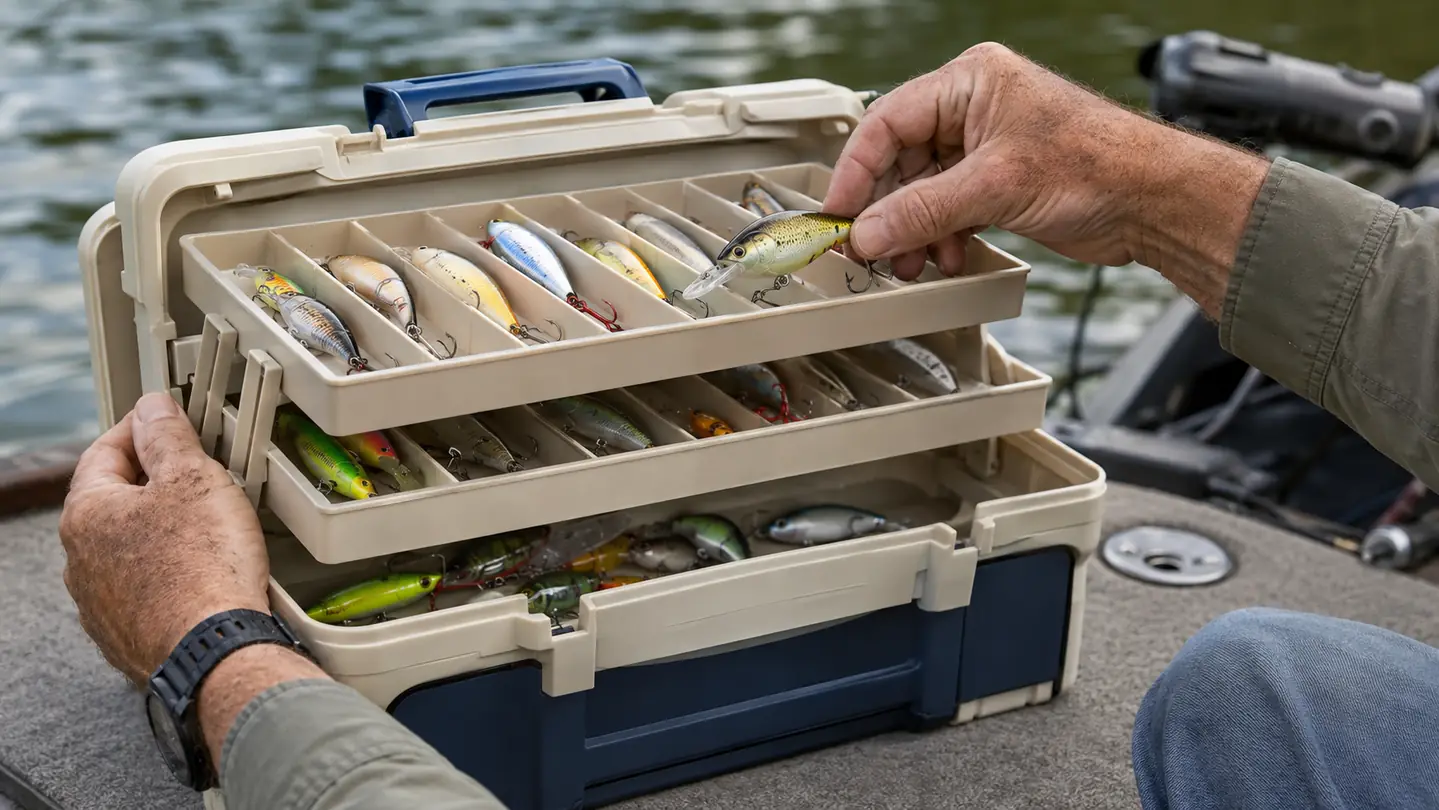
The two boxes open the same way, like a briefcase, with trays stacked on top of each other. But they feel different in the hand. The Plano is a solid, heavy box, and the trays are deep enough that a big crankbait lies flat instead of sitting cockeyed. The top tray puts the most-used lures in reach first, and the bottom tray sits over a deep storage well that I will get to in a minute. Nothing about the layout surprises you, and for a box this old and proven, that is a compliment.
The Flambeau is a lighter box with a flatter profile, and its trays are shallower and more uniform. That is not a knock, it is built for a different job. Everything sits low and tight, which is exactly what you want for hooks and weights, and the movable dividers mean you are not stuck with the factory layout. You can make a row wide enough for a spinnerbait or narrow enough for a dozen treble hooks. Both boxes keep their contents sorted. The difference is how much you want to customize.
Where Plano Wins
The first thing you notice about the Plano is the latch. It is a brass flip latch, and it is rust-proof, which matters more than most people think. I have killed plenty of latches over the years by leaving gear wet, and this one has not so much as stiffened. You can pop it open one-handed with a thumb while you are holding a rod in the other hand, and I did that a hundred times this season. The Flambeau's twin latches are secure, but they want two hands when they are cold and stiff, and cold is usually when I am in a hurry to get into a box.
The deeper win is the bottom storage. The Plano three-tray is really a three-tray-plus box, because the bottom tray sits on a deep well that swallows the stuff no tray can hold well. I carried a pack of buzzbaits, a box of jig heads, and a spare spool of line down there all season. When I am chasing smallmouth on the river and want to switch from a jerkbait to a spinnerbait without walking back to the truck, that deep well is what makes it a one-box rig. And the plastic is thick. After a season of bouncing around the Ozarks, this box does not have a crack in it, and the hinge pins have not worked loose.
There was a May morning on the Current River when the shad were spawning and every smallmouth in the stretch was keyed on them. I had the boat slid up on a gravel bar and was switching from a jerkbait to a spinnerbait every few casts. The Plano sat open on the deck the whole time, top tray flipped back, and I could reach the spinnerbait I wanted without taking my eyes off the water. That is the quiet win that does not show up on a spec sheet. A box that tips over or fights you when you open it costs you casts, and in the middle of a bite, casts are the only thing that count.
Where Flambeau Wins
The Stowaway's edge is the seal. The gasket around the lid does something the Plano will not do, it keeps water out. I left the Flambeau on the tailgate through a July thunderstorm once, not on purpose, and everything inside was dry. Do that with the Plano and you will be drying hooks for a week. If your tackle lives in an open boat or the bed of a truck, that seal is a real feature. It is the reason a lot of serious anglers keep a Stowaway in the back of the rig even when their main box is something else.
The other win is the dividers. The Plano trays are fixed from the factory, laid out for standard lures, and they are fine. The Stowaway lets you move the dividers around, so you can size a compartment exactly to the longest jerkbait you own or shrink one down to hold a single row of hooks. For an angler who carries a lot of terminal tackle, that customization pays for itself every time you open the box and the hook you want is right there instead of buried. It is the more thoughtful box for small stuff.
One March evening I set the Stowaway on the tailgate while I cleaned a mess of crappie at the river access, and a cold rain moved in before I got back to it. I figured the hooks would be rusted and the jigs tangled. Everything was dry, right down to the split shot in the bottom compartment. That is the case for the seal in one sentence. If your tackle lives where weather finds it, the Stowaway is the one that will not betray you.
What About Capacity and Portability
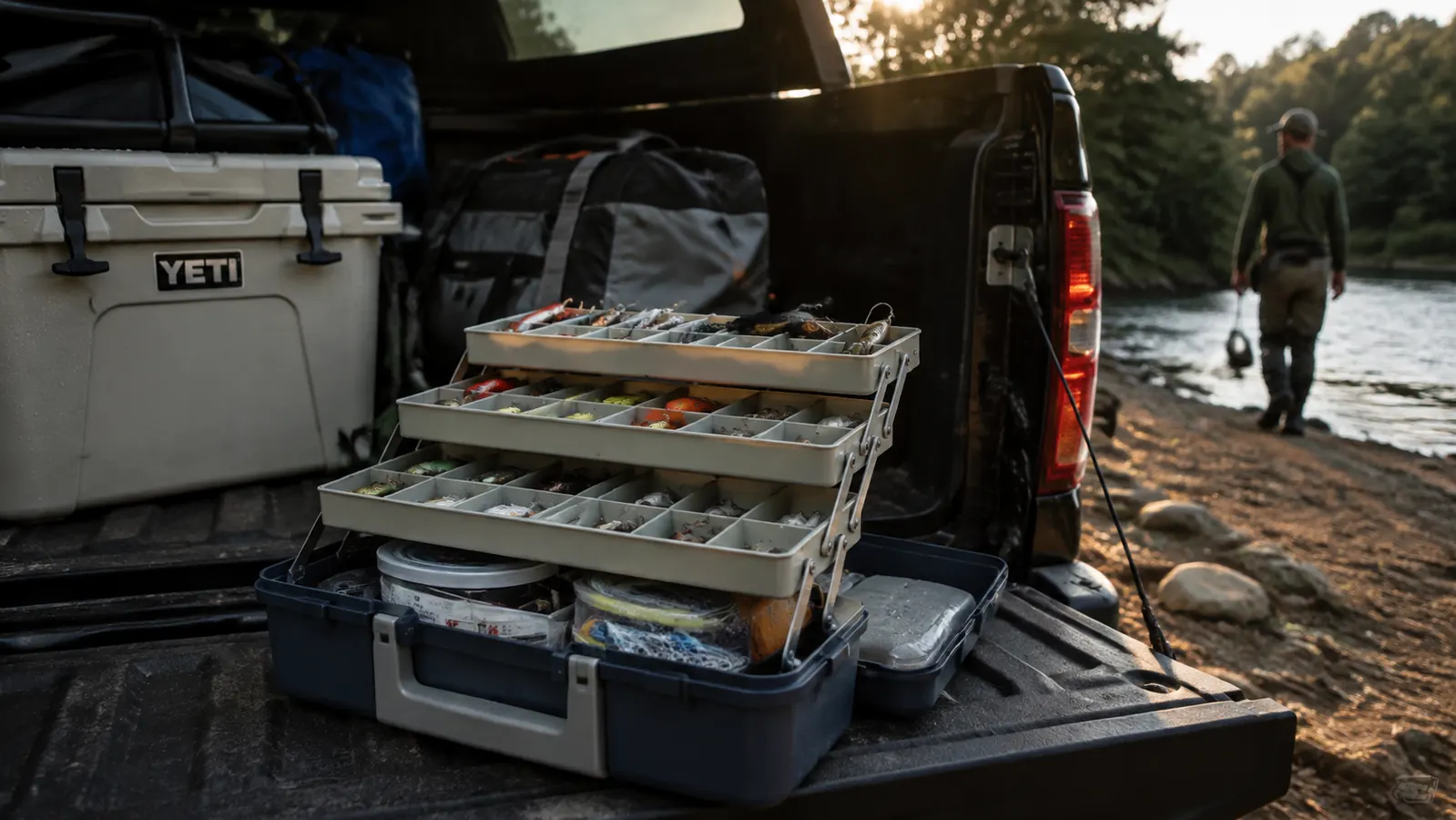
Both of these are real tackle boxes, not the little plastic utility boxes you can carry in a jacket pocket, but they are different sizes of box. The Plano three-tray is the bigger footprint of the two, and it fits in the bottom of most boats and the back of a four-wheeler without complaint. It is heavy when it is full, which I count as a good thing, because it stays where you put it. On a windy day on the deck, it does not slide around like the lighter boxes I have owned. And if you carry a box on a four-wheeler like I do, the square footprint sits steadier in a milk crate than the tapered Stowaway does.
The Flambeau is lighter and a little smaller, which makes it easier to grab one-handed and carry down to the bank. If you are the kind of angler who hikes to a spot, that matters. But the lighter weight cuts both ways, because a half-full Stowaway will skate across a slick boat deck on a hard turn. I solved that with a bungee on the boat, and I never had to tie the Plano down once. That small difference tells you a lot about how each box earns its spot.
The One-Box Carry That Earned the Boat Deck
After a full season with both, the Plano three-tray is the box I reach for first. Check today's price on Amazon and see if it earns a spot in your rig.
Amazon Check Today's Price on Amazon →Who Should Buy Which
Buy the Plano three-tray if you want one box that does most of the work. If you carry a mix of bigger lures and small terminal tackle, want a box that opens flat on a boat deck, and do not plan on leaving it out in the weather, it is the better buy. It is the box in my boat and the one I grab on the bank. It holds more useful gear in a smaller footprint than anything else I tried this season, and it is the one I would replace tomorrow if it walked off.
Buy the Flambeau Stowaway if your tackle is mostly small and your box lives outside. If you are a crappie or bream fisherman carrying mostly jigs, hooks, and weights, or your box rides in an open boat or truck bed where it takes weather, the seal and the adjustable compartments are worth it. It is a finer tool for a narrower job, and it does that job very well. I keep one in the truck for the days I am only after crappie and do not want to haul the whole boat load of gear.
The Bottom Line
Neither of these boxes is a bad buy, and I have said worse things about boxes that cost twice as much. The question is what you carry and where you carry it. For my fishing, the Plano three-tray is the better all-round box, and it is the one that earned a permanent spot on my boat deck. The Flambeau Stowaway is the one I grab when the trip is all small tackle and the forecast looks wet. If you fish like me, carry a mix of lures, keep your gear in reach, and want a box that takes a beating and keeps everything sorted, start with the Plano. Check today's price on Amazon and see if it fits your season.
Still Deciding? Start With the Plano
You can outfit the rest of your gear once you see how the box handles a real season. Check today's price on Amazon.
Amazon Check Today's Price on Amazon →