
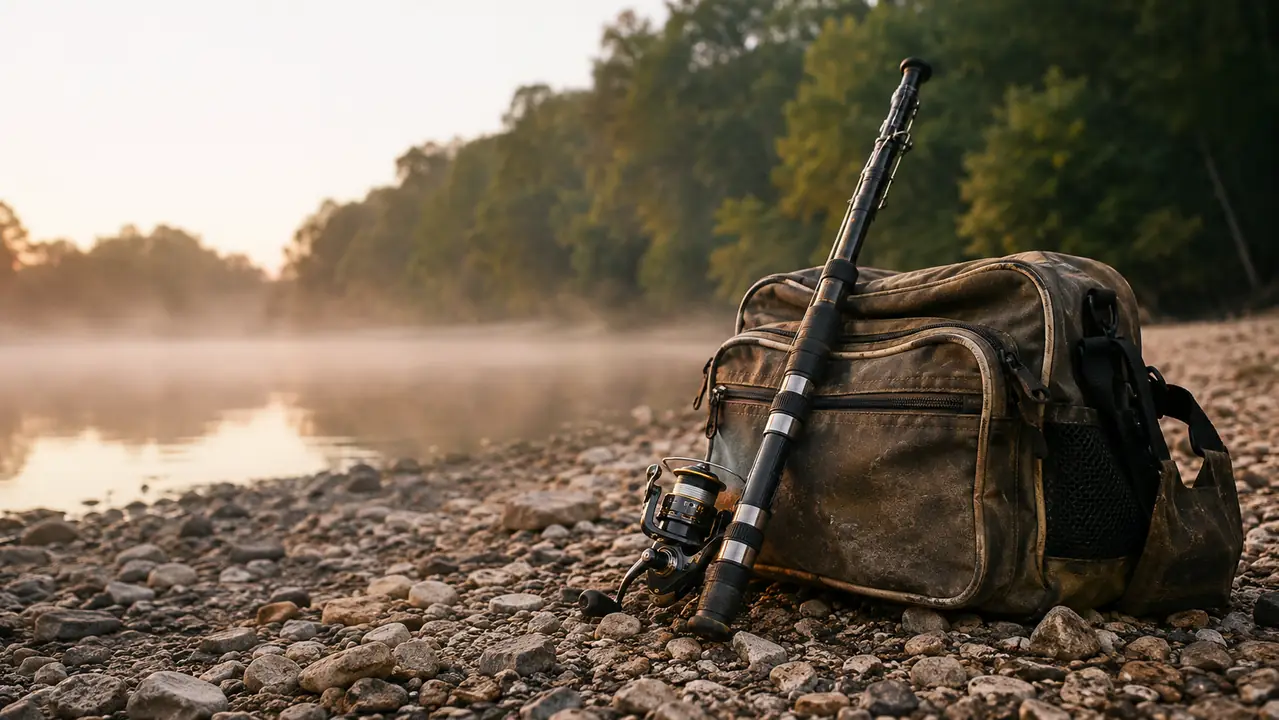
There are two ways to read the listing for the PLUSINNO telescopic combo. The first is that the specs are a fairy tale: carbon fiber blank, twelve plus one shielded bearings, stainless steel hardware, all at a price that makes you check the seller's name twice. The second is that it is the steal of the year and every angler who paid more for a one-piece rod has been a fool. I have now spent a full year carrying one in my four-wheeler box, fishing it from the bank and the boat, and handing it to a friend who did not know what he was holding. The honest answer is that neither version is true, and that is the first thing the listing will never tell you.
I am Bo Whitfield. I have fished these Ozarks rivers since I was a kid, and I do not get paid to say nice things about gear. I bought this combo last fall out of my own pocket, fished it through smallmouth, crappie, and catfish seasons, and left it in the truck all winter to see how it took the cold. This is the straight story: what surprised me, what wore out, and the three things I would want to know before ordering.
The Quick Verdict
A packable combo that fishes like a real rod until you push the drag, with one fix that matters: replace the line it ships with.
Amazon Check Today's Price →The honest pick if you need a rod that fits in the truck
After a year of hard use, I keep coming back to the PLUSINNO telescopic combo as the spare that is always there. Check today's price on Amazon and read the rest of what I found before you order.
Amazon Check Today's Price on Amazon →How I've Used It
Let me set the scene so you know what kind of review this is. This was not a rod that lived in a nice case and came out for a filmed test. I bought it in October, threw it in the front box of my four-wheeler, and for the next twelve months it just lived there. It went on a week-long float trip down the Eleven Point, got loaned to my cousin's boy for an afternoon of bluegill, and spent the whole winter riding in the back seat of the truck so it was always there if I saw water on the way home.
When I finally gave it a real season of attention, starting with the crappie run in March, I treated it like a regular rod. It cast jigs, it threw curly tail grubs, it sat in a rod holder while I ran a jugline. By the end of the year it had seen rain, river water, dust, and one hard drop off the tailgate when my dog knocked it out of the bed. That is the test a budget combo needs, because that is how most of us actually treat our gear. The morning it paid for itself came in late March on the North Fork, when the crappie had moved up shallow and I landed ten keepers off one gravel bar with a white curly tail grub under a slip bobber, the whole rig only a few feet past the bank.
One more thing about the test that matters. I did not spool it with premium line out of the box. I ran the first three weeks on the factory mono exactly as it shipped, so I could report on the out-of-box experience honestly. Then I swapped in ten-pound braid and ran it the rest of the year. That split is how I know the line is the first thing to fix, because I watched the same combo go from frustrating to excellent with nothing else changed.
What Actually Shows Up in the Box
Here is the first thing nobody tells you: the combo comes spooled with a basic monofilament that is not doing the reel any favors. It is usable, you can fish with it out of the box, but it is the kind of line you expect on a toy rod and it killed the casting distance until I swapped it. The blank itself looked better than I expected, with a clean finish and no glue smears on the joints. The reel is lighter than the price would suggest, which worried me at first, and then I remembered that light is not automatically cheap.
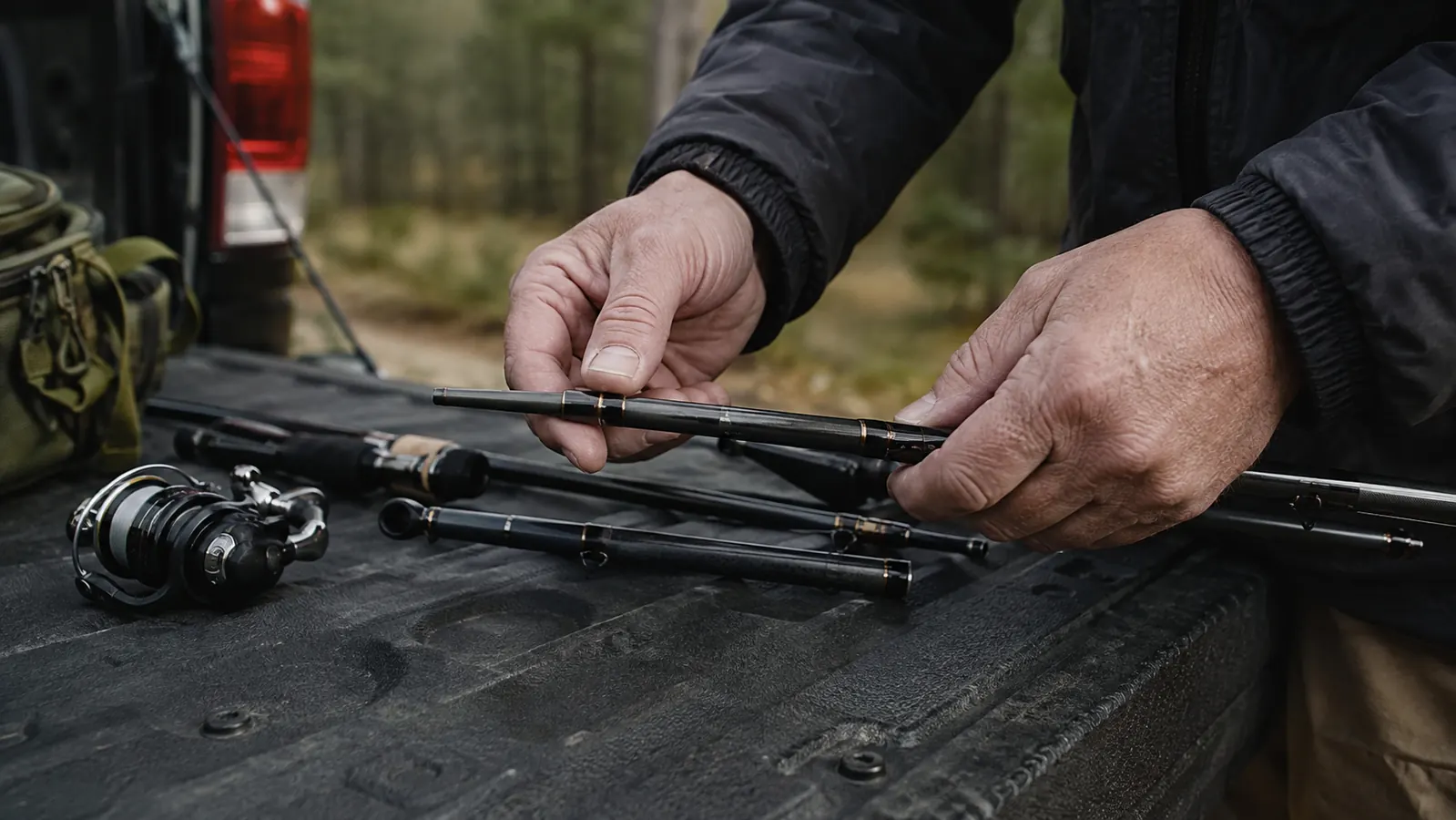
The second thing is the collapse. The sections do not telescope out with a casual flick the way you see in the videos. Out of the box the joints are tight, almost too tight, and you have to seat each section with a deliberate push and a quarter turn. That is a good sign. I would rather break a fingernail seating a section than have a rod that collapses mid-cast, and this one has never done that.
The First Upgrade That Matters
I am going to be blunt: before you ever wet a line, take the mono off and put on a fresh spool of braid. Ten-pound braid on mine turned it into a different rod. The casting distance went up, the line stopped coiling off the spool, and suddenly I could feel the tick of a smallmouth picking up a jig off the bottom. The combo is a good value out of the box, but the line is the one thing holding it back, and fixing it costs almost nothing.
This is the kind of detail that separates an honest review from a paid one. The listing does not tell you the reel ships with budget mono, and it does not tell you that a fresh spool of line makes the whole combo perform like a rod that costs a good bit more. If you order one, budget for the line. It is the single best thing you can do for it.
Casting in the Wind
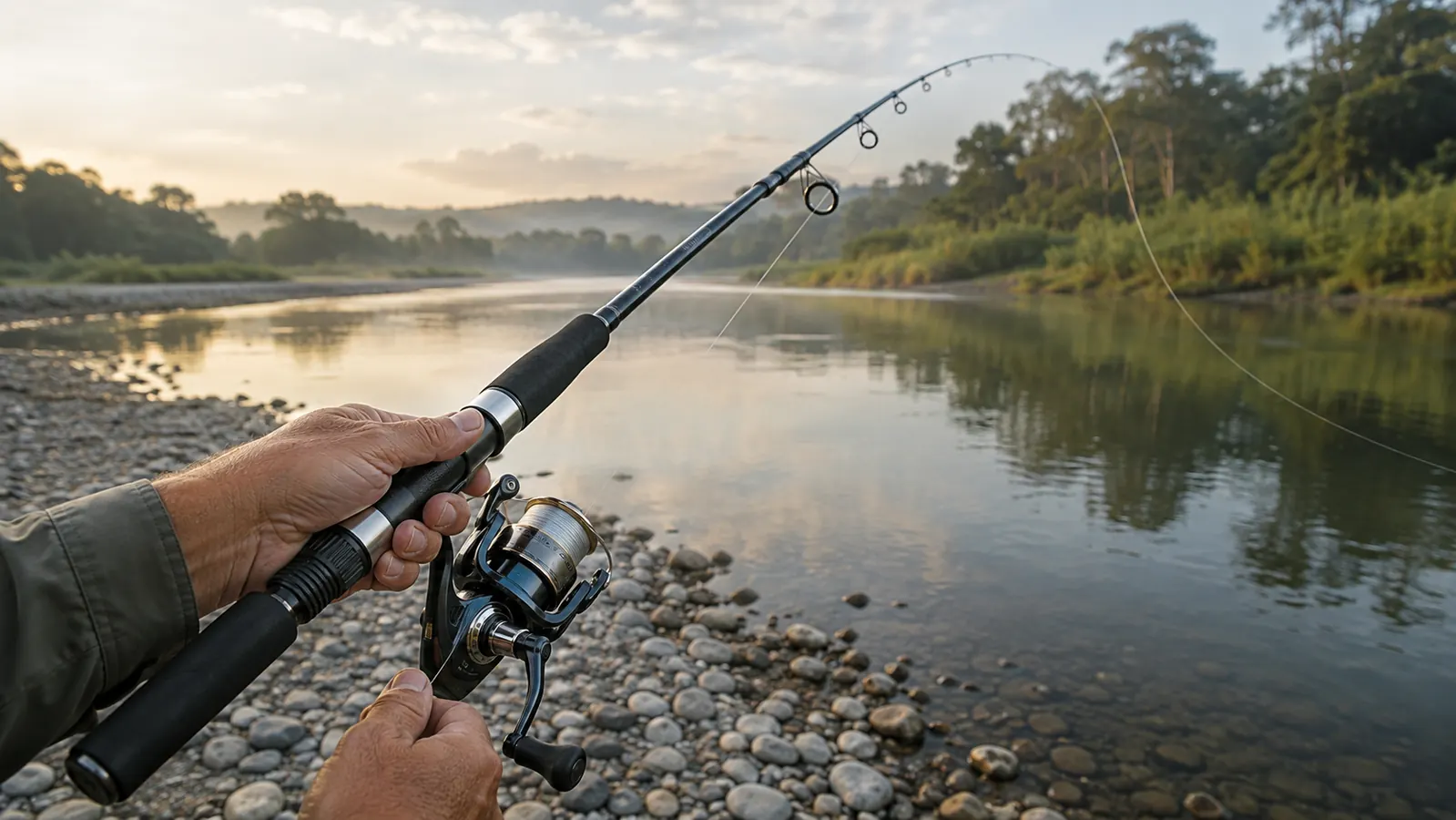
Most reviews test a rod on a still morning with the water like glass. Nobody fishes a budget telescopic into a river wind in March, so here is that test. The stiff blank handles a headwind better than I expected. With ten-pound braid spooled on, I could still reach a pocket on the far bank with a one-eighth-ounce jig on a day when the flags on the boat docks were standing straight out. The short collapsed rod also means less surface for the wind to grab, which sounds like a small thing until you have spent a morning fighting a long one-piece rod in a breeze. The worst of it came on a March morning on the Jacks Fork when the wind came straight down the hollow, and the combo still put a one-eighth-ounce jig into the seam behind a logjam where a one-piece rod would have been too much rod to swing from the bank.
The honest knock is that the light tip sails in a crosswind. Cast directly across the wind and the jig gets pushed off line more than it would on a heavier rod, so you will miss a few pockets you were aiming at. The fix is simple: keep your cast lower, let the rod do the work, and do not try to lob it. Once I changed my angle, the wind stopped being an excuse. That is the kind of detail you only learn by fishing it, not by reading the box.
The Reel, Priced Honestly
The reel is where I expected the corners to get cut, and I want to be fair about what I found. The retrieve is genuinely smooth, thanks to the twelve plus one bearings, and the stainless steel bail and line roller have not rusted after a year of river water and neglect. For the money, the drag is better than I expected. I fought a flathead around 12 pounds in July with the drag cinched down and it held without stuttering, which is more than I can say for some reels that cost twice as much.
But here is what the listing will not tell you. The bearings are shielded, not sealed, which means this reel is not a swimmer. Drop it in the river bottom and you will hear about it later. And the drag is not finesse-grade. You have enough range for normal fishing, but you cannot feather it the way you can on a premium reel. If you fish nothing but big fish that test the drag, this is the wrong reel, and no number of bearings changes that.
By the end of the year the bail still snapped shut with authority and the anti-reverse had not developed any slop. I have not needed a single replacement part, and I have not lost a fish to the reel. That is the honest tally for a year of abuse at this price.
A Year of Honest Wear
The rod blank is the surprise of the whole review. Twelve months of bouncing around and it still locks up tight, section by section, with no wobble at the joints. The guides have not thrown a liner, the reel seat has not cracked, and the hook keeper is still in place. I have had zero broken tips, which is remarkable for a telescopic rod that has been dropped and banged around the way this one has.
If you buy this combo, learn the collapse routine early. You extend it tip-first, seating each section with a slight twist until it clicks, and you break it down the same way, tip section first, one joint at a time. People who ruin telescopic rods are the ones who yank the whole thing apart like a baton or force the big end first. Do it the patient way and the joints stay true for years. A telescopic rod is only as good as the habit you build, and this one rewards the habit.
I put it in the boat more than I expected. On a day trip to a lake north of the house, I kept the PLUSINNO as a second rod rigged with a curly tail grub while my main rod sat in the rod locker. A smallmouth around two pounds hit it on the third cast and the rod handled the fight fine. The honest wear is all cosmetic: scuffs on the blank where it rubbed against the four-wheeler box, fine scratches on the spool lip from knocks. None of it affects how it fishes, and that durability is the reason I keep recommending it to people who need a spare. One thing I checked all winter was whether the cold made the joints stick. On a January morning when it had sat in the truck overnight at twenty degrees, the sections still came apart clean and locked back up the same way, which told me the tolerances were better than the price suggested.
After a year of real abuse, the honest answer is the boring one. The PLUSINNO is not magic and it is not junk. It is a genuinely useful packable combo that needs one upgrade and one honest expectation.
What the Listing Never Tells You
So here is the honest summary, the part no spec sheet covers. First, this is a packable rod first and a fishing rod second. It collapses to the size of a walking stick, which is the entire reason to buy it, and that convenience costs you some feel on the hookset. It will never load up like a one-piece rod, and anyone who tells you otherwise has not fished one.
Second, it fishes best as a light-tackle tool. It wants to throw light jigs and small baits, and it excels at that. It is not a winch for horsing fish out of heavy cover. Match it to the fishing you actually do and it will surprise you. Third, buy it for what it is: a spare, a loaner, a truck rod, a first rod for a kid. It is not a replacement for a serious one-piece setup, and it is not trying to be.
One thing I want to address is the online rating. This combo sits at 4.3 stars, and a lot of the reviews read like they were written by people who have never owned a nicer rod. The one-star reviews are mostly the same complaint: it is not a one-piece rod and the reel is not premium. Both are true and both are the wrong complaint. You are not buying a one-piece rod. You are buying a rod that fits in a backpack and still catches fish, and on that measure the rating holds up.
What I Liked
- Fits in a backpack side pocket, under a truck seat, or in a four-wheeler box
- Joints stayed tight through a year of real abuse with zero broken tips
- Reel stayed smooth and rust-free on stainless hardware all year
- The stiff blank casts light jigs a long way from the bank and into a wind
- A price point that makes it painless to own as a true spare
Where It Falls Short
- The mono it ships with holds it back until you swap in braid
- The drag runs out of range when a big fish really leans on it
- Shielded, not sealed, so a dunk shortens the reel's life
- Not the rod for heavy cover or horsing fish out of weeds
Who This Is For
This combo is for the angler who has been burned by the thought of carrying a rod. It is for the camping trip, the four-wheeler ride, the hike to a backcountry lake, the afternoon you drive past a creek and wish you had anything at all in the truck. If you want a rod that is always there, the PLUSINNO is exactly that. It is also the best loaner I own, because I do not flinch when I hand it to somebody and it always comes back in one piece. I have packed it on the front rack of my four-wheeler to a stretch of the Current that only sees wade fishermen, fished an hour before dark, and had it collapsed and back in the box before the mosquitoes got serious.
Who Should Skip It
If you are a serious bass angler with a rod locker and a boat, this is not the rod that will replace your good ones, and it is not trying to be. You will notice the flex in the blank and you will want your one-piece rods back. And if you spend your weekends fishing thick cover where you have to winch a fish out of the weeds, get something with real backbone. The PLUSINNO is a light-tackle tool that wants light baits and a patient hand. Buy it for what it is and you will not be disappointed.
The honest spare that has been in my truck all year
After a year of abuse, the PLUSINNO telescopic combo has earned its spot in my gear. It is not magic, and I told you exactly what it needs. Check today's price on Amazon.
Amazon Check Today's Price on Amazon →