
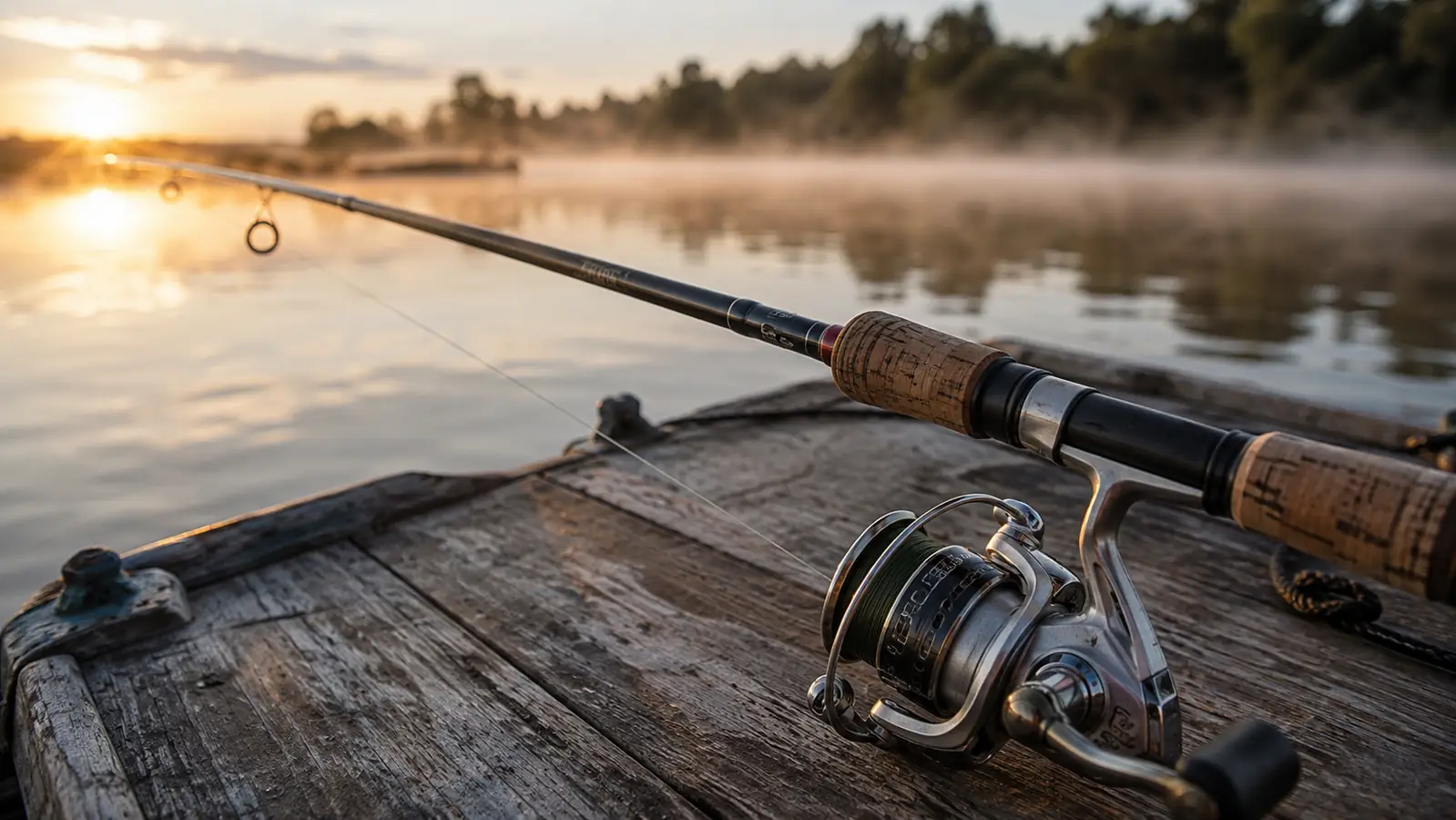
Every spring I get the same question on the river bank: Power Pro or SpiderWire? Somebody is usually standing there with a spool in each hand, trying to remember which one let them down the year before. I stopped guessing two seasons ago. I spooled one reel with Power Pro and one with SpiderWire, ran the same lures on the same water, and kept a log until I had an answer I trusted. This is that answer, and it is not a one-liner.
Here is the short version before the details. Power Pro is the tougher line. SpiderWire is the smoother caster. If your fishing is river rock, fallen timber, and catfish on a jugline after dark, spool up with Power Pro and do not look back. If you live on open water and want every foot of casting distance a spinning reel will give you, SpiderWire Stealth is a hard line to beat. Everything below is the season of notes behind that two-sentence answer.
First, why braid at all. I fished monofilament for most of my life because it is cheap and forgiving, and I still run mono on my topwater rod. But mono stretches, and that stretch is the difference between a good hookset and a fish that feels the hook and is gone. Braid has no stretch, so every twitch of the rod goes straight to the hook. Power Pro and SpiderWire are the two names everybody reaches for, and they get you there in different ways.
| PowerPro | SpiderWire | |
|---|---|---|
| Abrasion resistance | Stiff and round, grinds against rock and timber and holds | Slick coating wears faster on rough structure |
| Casting smoothness | Stiffer and a little noisy through the guides | Limp and round, lays off the spool in long quiet casts |
| Knot strength | Holds a Palomar and a uni knot without slipping | Slick finish can let knots slide if you do not cinch hard |
| Price per spool | The name carries a small premium | Usually a few dollars less for the same length |
| Fuzz over a season | Frays evenly but keeps its strength where it counts | Coating fuzzes and peels sooner under heavy abuse |
| Best for | Timber, river rock, catfish, heavy cover | Open water, finesse rigs, long casts on spinning gear |
The braid I trust in the timber
This is the line on the reel I reach for when the fish are hugging the snags. Check today's price on Amazon before you spool up.
Amazon Check Today's Price on Amazon →How I Ran the Test
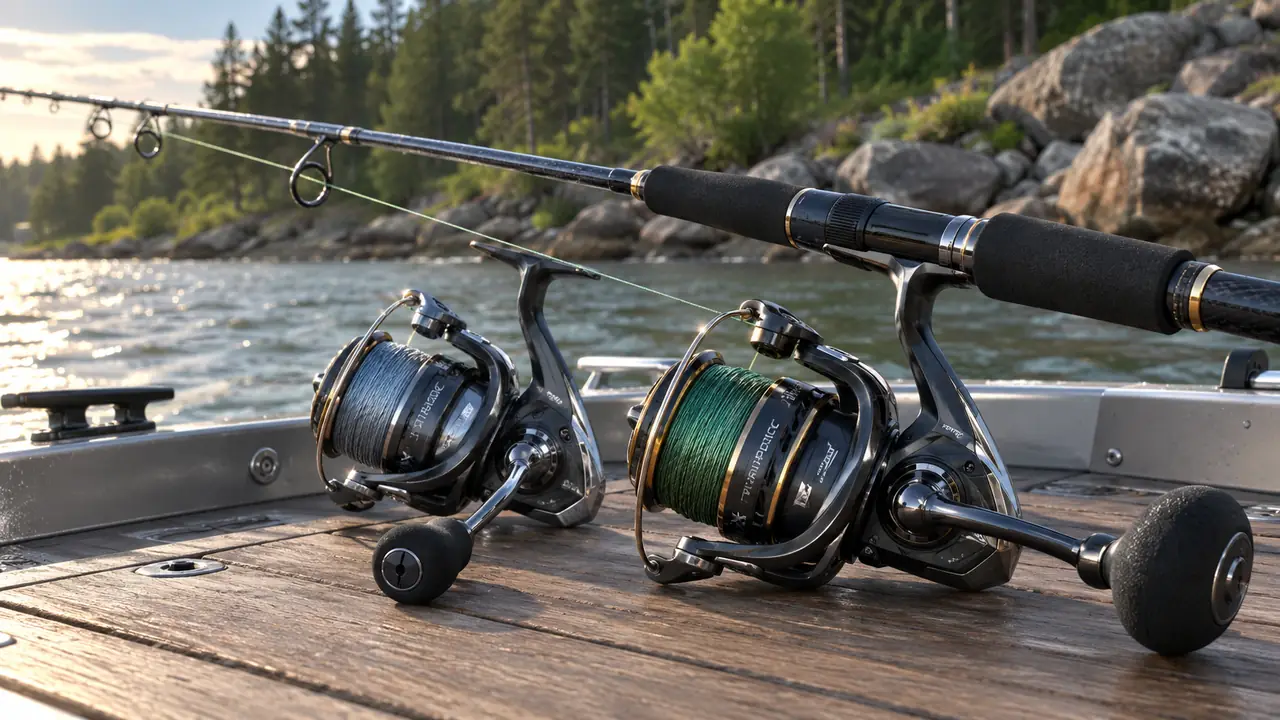
I set it up as fairly as I could. Two identical 2500-size spinning reels on two identical seven-foot medium spinning rods, both spooled with ten-pound braid. One got Power Pro, the other got SpiderWire Stealth. Same reels, same rods, same lures, same water, the only variable being the line. I swapped which reel I grabbed on any given trip so I did not end up favoring one side of the boat.
The water was a real mix. All spring and summer I fished the Current River for smallmouth, where the fish live around rock shelves, gravel bars, and cedar laydowns that will eat a line for lunch. Then I made three long weekends on a big reservoir chasing crappie and bass off points and brush piles, open water where casting distance and a clean presentation matter more than armor.
What I actually wrote down in my log was the boring stuff: wind knots per trip, casting distance on calm evenings, knot failures, how the line felt after a morning dragging across rocks, and how it looked after a whole season in the sun. Both lines are zero-stretch braid, so both are sensitive enough to feel a crawdad on the bottom. The differences showed up in specific places, not everywhere at once.
Where Power Pro Wins
Put both lines against a rock shelf full of zebra mussels and the gap is not close. PowerPro is stiffer and rounder, so when a smallmouth runs you into a snag, the line grinds against the rock instead of slicing through. I watched a Power Pro line hold a fish for a full minute while it sawed across a ledge, and the line came back fuzzy but still landed the fish. SpiderWire wants to give ground in that same spot, and over a season that cost me fish.
The knots are the second place PowerPro wins, and this one matters more than people think. A Palomar or a uni knot cinches down on PowerPro and stays put, the way you expect a knot to behave. SpiderWire has a slick finish that wants to slide if you do not pull the knot down hard with it wet first. On a hot day, in a hurry, with a big fish on the other end, that is not the kind of failure you want to be discovering.
Over a full season the PowerPro also held up better on the last ten feet. It fuzzed, no question, braid always fuzzes, but it fuzzed evenly and kept its strength where it counted. On the SpiderWire reel the coating started to peel in patches on the section that worked over the rocks most. Neither line is indestructible. But if the question is which one survives the nastiest water, Power Pro is the answer.
Where SpiderWire Wins
SpiderWire is the better caster, and that gap is not close either. It is limp, round, and slick, so it comes off a spinning reel in long, quiet loops instead of stiff curls. I gained real distance on my casts with it, especially casting light lures into a headwind, and I counted far fewer wind knots over the season. If your game is open water and putting a lure a mile, that casting advantage is worth more to you than anything else on this page.
It also lays flat on the spool with less coil memory than PowerPro. After a reel sits in a rod holder for a week, the SpiderWire comes off the spool smooth and ready, where the PowerPro wants to hold a memory of the coil. On a spinning reel, that limpness is a real comfort. Fewer tangles on the first cast of the day is a quality I did not appreciate until I had both reels in front of me.
And it usually costs a few dollars less per spool for the same length, which matters when you are spooling three reels at once. When the budget is tight and the water you fish is open, SpiderWire is the sensible pick. You are giving up some armor at the snags, but you are buying smoother casting, easier handling, and money left over for a spare spool of line.
Power Pro grinds against a rock for a full minute and still lands the fish. SpiderWire outcasts it by twenty feet on a calm evening. You are not choosing a winner, you are choosing which trade-off you can live with.
How They Spool and Cast
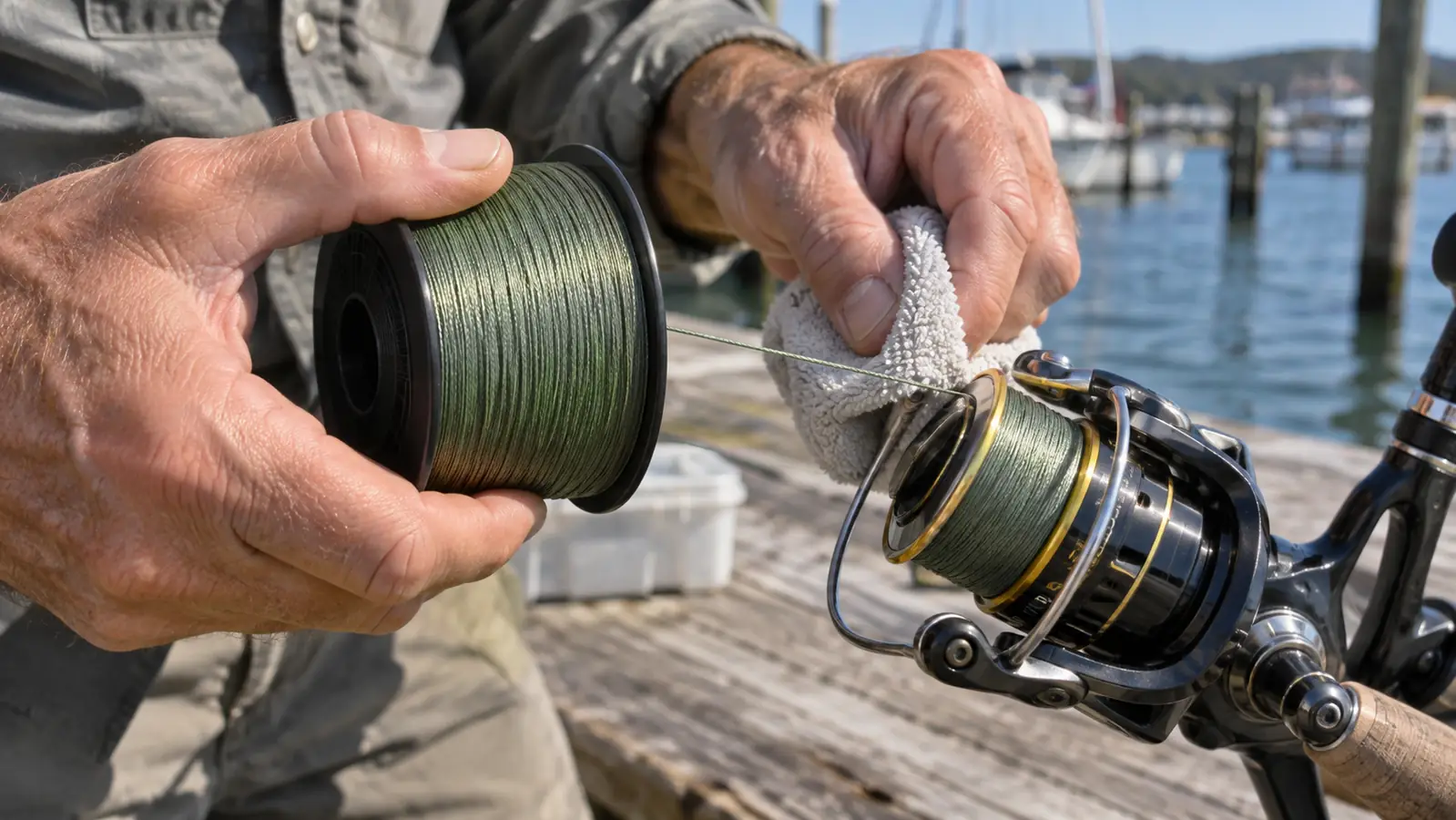
Spooling is where a lot of the difference between these two shows up before you ever wet a line. Braid has no memory of its own, so it will happily twist and bird-nest on a spinning reel if you put it on wrong. I spool both lines the same way now: run the line through the first guide, put a wet rag on it for tension, and fill the spool to within an eighth of an inch. PowerPro is stiff enough that it behaves even when you rush. SpiderWire is so limp that it will dig into the spool if you let it pile up loose, so it demands the wet rag treatment more.
On the cast, the difference is in the sound as much as the distance. PowerPro makes a soft whistle through the guides, and it carries a little more air noise on a hard cast. SpiderWire goes out almost silent. Neither is a problem, but if you fish quiet water the noise is real, and it is something you notice on a still morning. Smallmouth are not line shy the way trout are, but quiet water makes you appreciate a quiet line.
The Part Nobody Tells You
Here is what the box does not say. Both lines fade in the sun, so do not pick one for the color. Both fuzz on the last ten feet after a season of hard fishing, and that is where you tie on a fresh leader instead of replacing the whole spool. And both will bury themselves in a spinning reel if you spool them wrong, so the spooling method matters more than the brand choice.
The bigger lesson from my log is that the leader is half the system. Braid has no stretch, so I run a fluorocarbon leader on both lines. On the PowerPro reel I can fish a heavier leader around timber and trust the connection knot, because the braid is strong enough to back it up. On the SpiderWire reel I drop to a lighter leader for casting distance and change it out more often, because the slick braid wants a fresh knot. Line brand matters, but it matters less than how you finish the rig.
If you are switching from mono, the one knot you need to learn is the double uni or the Albright for tying braid to a leader. Do not tie a clinch knot with braid and expect it to hold, the slick line will work its way out under pressure. I use a double uni for ten-pound braid to fluorocarbon, and I wet everything before I pull it down. That one habit has saved me more fish than any line choice on this page.
Who Should Buy Which
Buy PowerPro if your fish come from places that can cut a line. River rock, laydowns, bridge pilings, catfish timber, lily pads thick enough to walk on. It is the tougher all-rounder, and if you only spool one reel for the season and you are not sure which way to go, this is the one I would hand you. It is the line I reach for when the fish are in the nasty stuff.
Buy SpiderWire if you fish open banks and points, throw light lures on spinning gear, and cast for distance the way a tournament guy does. If you are on a budget, SpiderWire gives you most of the performance for a little less money. Just cinch your knots wet and check the last ten feet of your line every few trips, because the slick coating is the price you pay for that smooth casting.
My honest recommendation if you only buy one: Power Pro. It is the safer line, the one that fails slow instead of fast, and the one that keeps you fishing when the fish are in the places that break lines. If you already own a reel spooled with SpiderWire and it has treated you fine, keep fishing it, because it is a good line. But if you are starting fresh and want the line that takes the abuse, PowerPro is where I land.
One last note on the price question, because I know that is what a lot of you are really asking. Braid is not a one-time purchase, it is a consumable, and you should plan to replace it every season or two depending on how hard you fish it. When I add up what a season of PowerPro costs me versus what a season of SpiderWire costs, the difference is small enough that I do not let the price pick my line for me. The water you fish should pick it.
Spool up with the line that takes the abuse
After two seasons, the PowerPro reel is the one I grab when the fish are hugging the snags. See today's price on Amazon and put a fresh spool on before your next trip.
Amazon Check Today's Price on Amazon →