
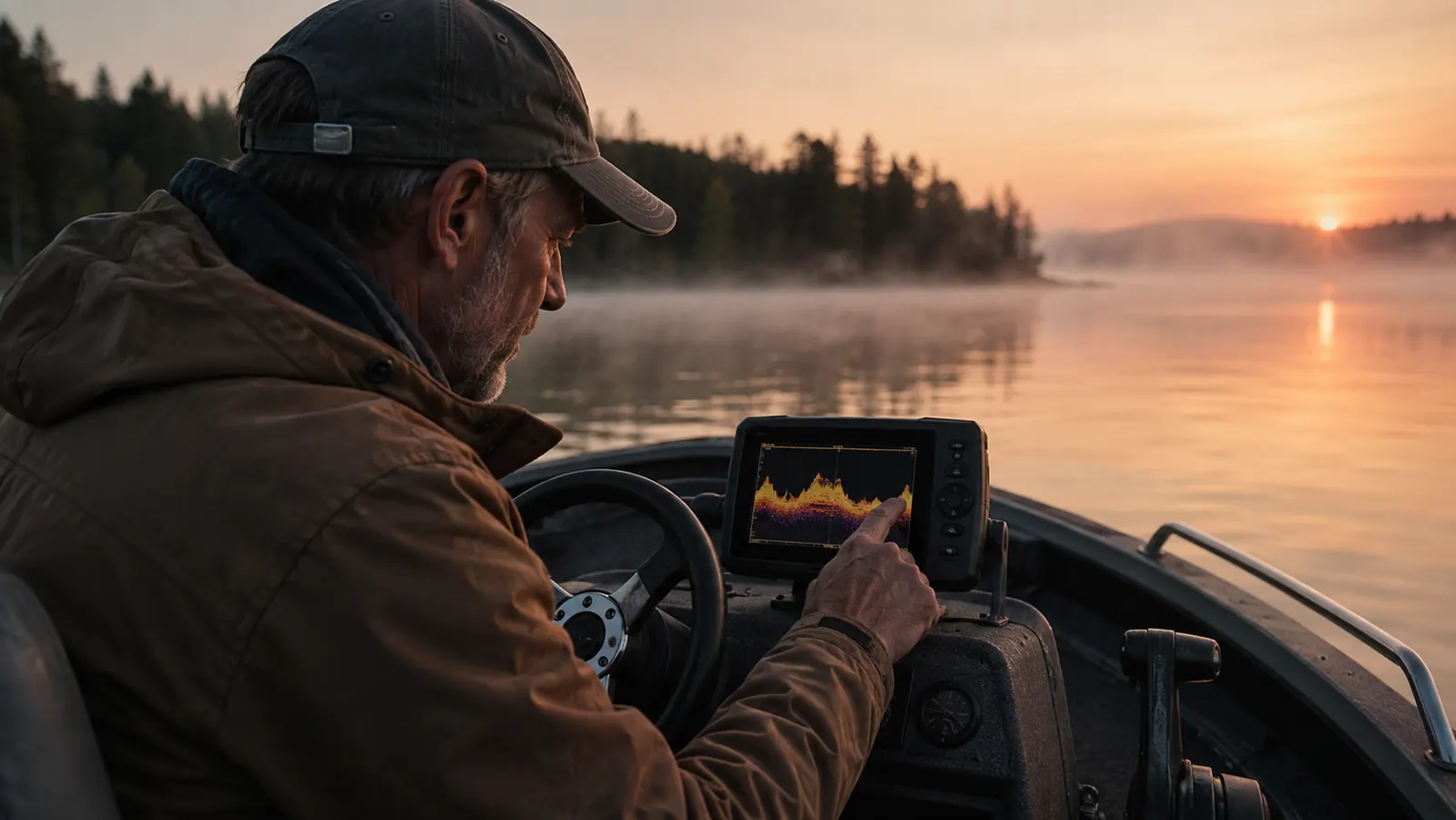
I grew up scouting water the slow way. Idle a stretch, watch the surface, drift a little, guess where the fish might be holding, and burn half the morning proving the guess wrong. On the river that cost me nothing but time. On a big lake it cost me whole trips. The first day I mounted a Garmin Striker 4 on the bow of my boat, I learned what I had been missing. Scouting is not about covering more water. It is about covering the right water once.
I am Bo Whitfield, and I fish the Ozarks year round, smallmouth on the river, crappie in the early spring, catfish on juglines in the summer. The Garmin Striker 4 has been on my boat for two seasons, and it has changed how I spend a morning more than any rod I own. Here are the ten reasons a fish finder cuts your scouting time in half.
Make Your First Pass the Last One
A Garmin Striker 4 with built-in GPS marks the bottom, the fish, and the spots worth coming back to. Stop scouting on guesses.
Amazon Check Today's Price on Amazon →It Reads the Bottom Before You Cast
Most of a lake is empty water, but you cannot tell that from the surface. The Striker 4 shows depth and bottom hardness as you move, so the hard gravel of a current river point reads different from a silt flat. I used to drag lures across a mile of dead bottom to find the one stretch that held fish. Now I watch the screen, and I only cast where the bottom says fish should be.
Chirp Separates the Fish From the Bait
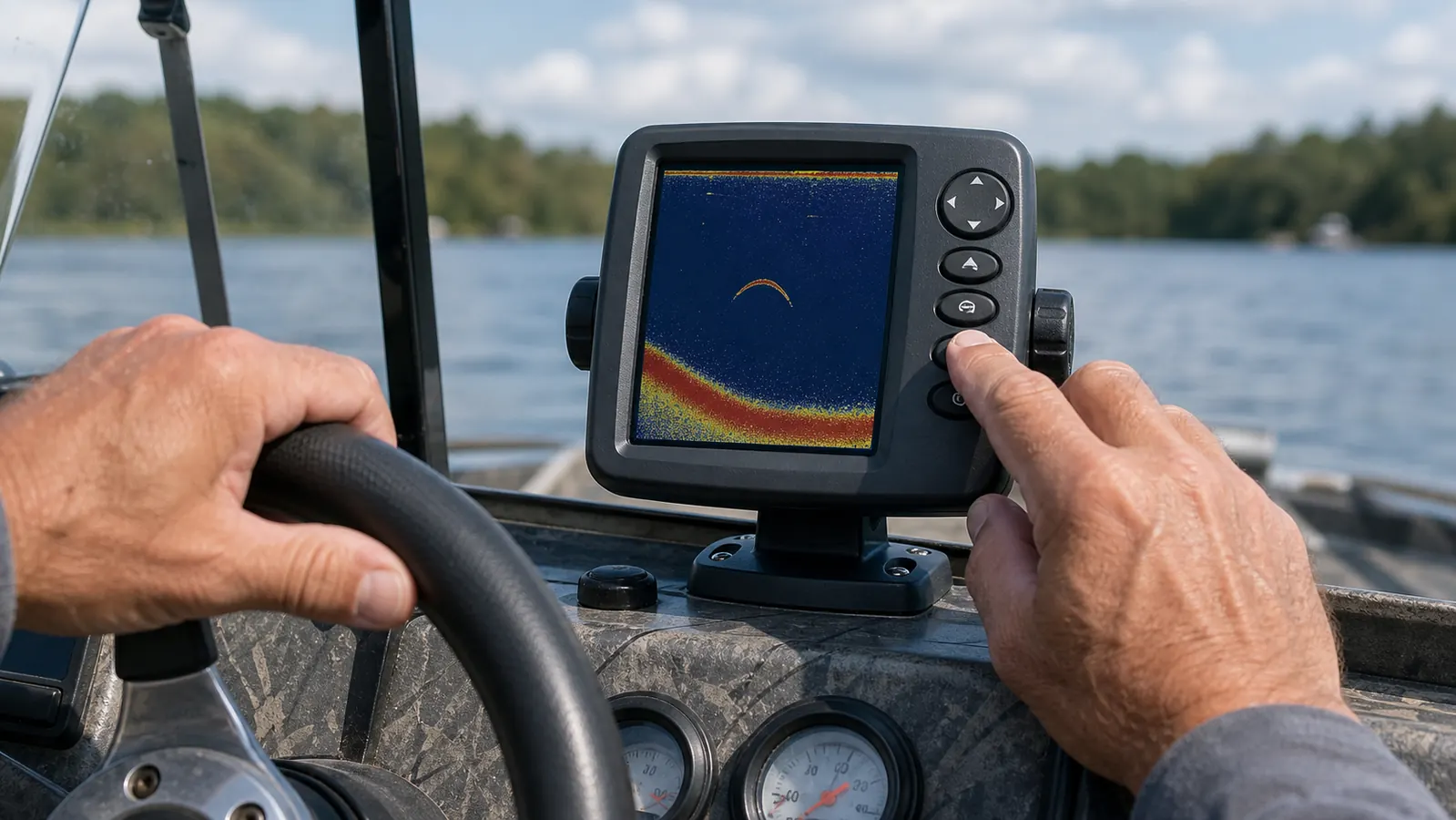
A school of shad shows up as a big fuzzy cloud, and a bass sitting under it shows up as a clean arch. On a plain sonar that cloud and that arch blur together into one mess you cannot read. With Chirp, the Striker 4 keeps them separate. Last spring I marked a line of arches under a shad cloud at eighteen feet and caught three smallmouth off that one spot before the bite died.
Waypoints Mean You Never Re-Scout a Good Spot
The brush pile I found in June used to be gone by September, because I could not remember exactly where it sat. Now I push the mark button and the Striker 4 saves the spot with GPS. I come back the next trip, and there it is, right where I left it. A spot you can mark is a spot you own, and a spot you own does not need scouting twice.
Water Temp Tells You Where to Look
The transducer reads surface temperature, and that one number cuts my options fast. In the early spring the crappie follow the fifty-five-degree water into the backs of coves. Instead of fishing the whole lake to find that pocket, I run the shoreline watching the temp readout, and I stop where the number says stop. It turns a full-morning search into a twenty-minute pass.
You Cover Water in Passes, Not Wanders
Scouting used to mean drifting wherever the wind pushed me and hoping I crossed something. With the Striker 4 I work a cove like a mower cuts grass: run a pass along the channel edge, watch the screen, turn, run the next pass. Every pass tells me something about the water I just covered. You end up covering the whole cove on purpose instead of half of it by accident.
It Sees the Structure the Surface Hides
The best cover in a lake is the stuff you cannot see from the top: a stump field at twelve feet, a rock pile off a point, an old creek channel winding through a flat. The Striker 4 draws all of it on the screen as you pass over. I have found brush piles I would have trolled over a hundred times without knowing they were there, and those are exactly the spots the big fish use.
A New Lake Gets Familiar in an Hour
The first time I take the boat to a lake I do not know, I used to budget a full day to learn it. With the Striker 4 I can find the main channel, the points, and the deep holes in the first hour, and save every one of them as a waypoint. The second trip is not a scouting trip at all. It is a fishing trip to spots I already marked.
It Shows the Ledge, Not Just the Depth
Summer smallmouth sit on the edge of a ledge, where the bottom falls away fast. On the screen that ledge looks like a wall, and the fish hold right along the lip. I used to spend whole afternoons drifting a lake hoping to cross one of those drops. Now I run the bank and watch for the wall, and I anchor the boat right where the wall starts.
It Finds Where the Fish Are Now
The best memory in the world goes stale. The hole that held fish last May may be empty this May, because the fish moved with the bait and the current. The Striker 4 shows you where they are today, in real time. You spend your scouting minutes on the water in front of you, not on last year's memory of a spot a mile away. Live information beats a good memory every time.
It Cuts Scouting So You Spend the Day Fishing
Here is the honest version: the fish finder does not catch the fish, and I would not tell you it does. What it does is collapse the part of the day that does not catch fish. The hour I used to spend idling and guessing is now ten minutes of passes and waypoints, which leaves the rest of the morning for the part I actually came for. That is the whole trade, and I make it every trip.
How I Set Mine Up for Scouting
A few settings make the difference between a screen you can read and a screen full of noise. I run the Striker 4 in Chirp mode, keep the gain set so the bottom shows as a clean line instead of a fuzzy band, and I mark a waypoint every time something interesting shows. On a new lake I do not leave the ramp without the first three waypoints saved: the channel edge, the first point, and the first drop-off.
What I'd Skip
Do not buy the Striker 4 expecting a full map chart or a big colorful screen. The display is 3.5 inches, and in bright sun you will shade it with your hand to read it. It does not come with detailed lake maps, so you are marking your own spots, not pulling them off a chart. If you only fish from the bank, or you never fish water deeper than a few feet, a fish finder is a gadget that will sit in the garage. Buy it for the boat days when scouting time is the difference between a good trip and a wasted one.
Last spring I marked a line of arches under a shad cloud at eighteen feet and caught three smallmouth off that one spot before the bite died.
Stop Guessing, Start Marking
The Garmin Striker 4 has cut my scouting time in half for two seasons. Mount one, mark your spots, and spend the morning fishing instead of hunting.
Amazon Check Today's Price on Amazon →