
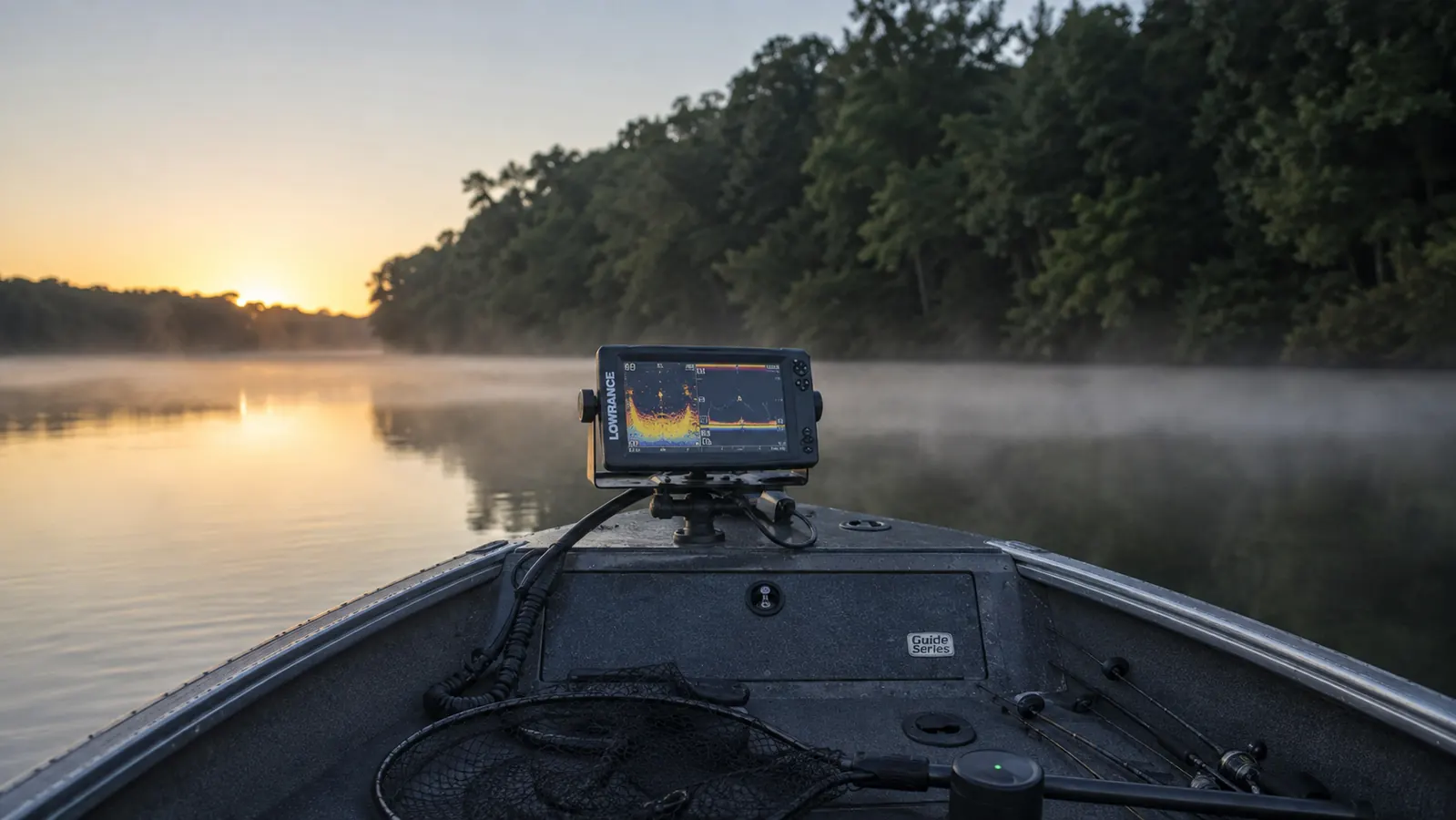
The first rule of fishing the same river for ten years is that the fish move and you do not. I had my spots on the James: a laydown above the second bend, a hole below the gravel bar, a stretch of slack water that held crappie every March. But by the spring of 2024 I was tired of spending the first two hours of every trip burning line to find out the fish were forty feet to the left of where I thought they were. That is why I put a Garmin Striker 4 on the bow of my sixteen-foot aluminum V-hull. Two seasons later, that little screen has put more fish in the boat than any rod in my rack, and it has some honest limits you ought to know about before you spend the money.
I want to be clear about what this review is and is not. I am not an electronics guy. I do not read a sonar screen the way a tournament pro does, and I never will. I am a bank and small-boat angler who wanted to stop guessing where the fish were, mark the good spots so I could find them again, and do it all without taking out a second mortgage on the tackle box. The Garmin Striker 4 is the answer to that exact question, and it has been bolted to my boat through two full seasons of smallmouth, crappie and catfish.
The Quick Verdict
The Garmin Striker 4 is the best budget fish finder for a small-boat angler who wants clear sonar and simple GPS without a chart subscription. Two seasons in, it still marks brush piles and bait balls the way it did on day one, and you trade a small screen for a whole lot of honesty.
Amazon Check Today's Price →Stop Guessing Where the Fish Are
After two seasons on my boat, the Garmin Striker 4 still marks the same brush piles I saved as waypoints last year. If you fish a small boat and want your time on the water to count, check today's price on Amazon.
Amazon Check Today's Price on Amazon →How I've Used It
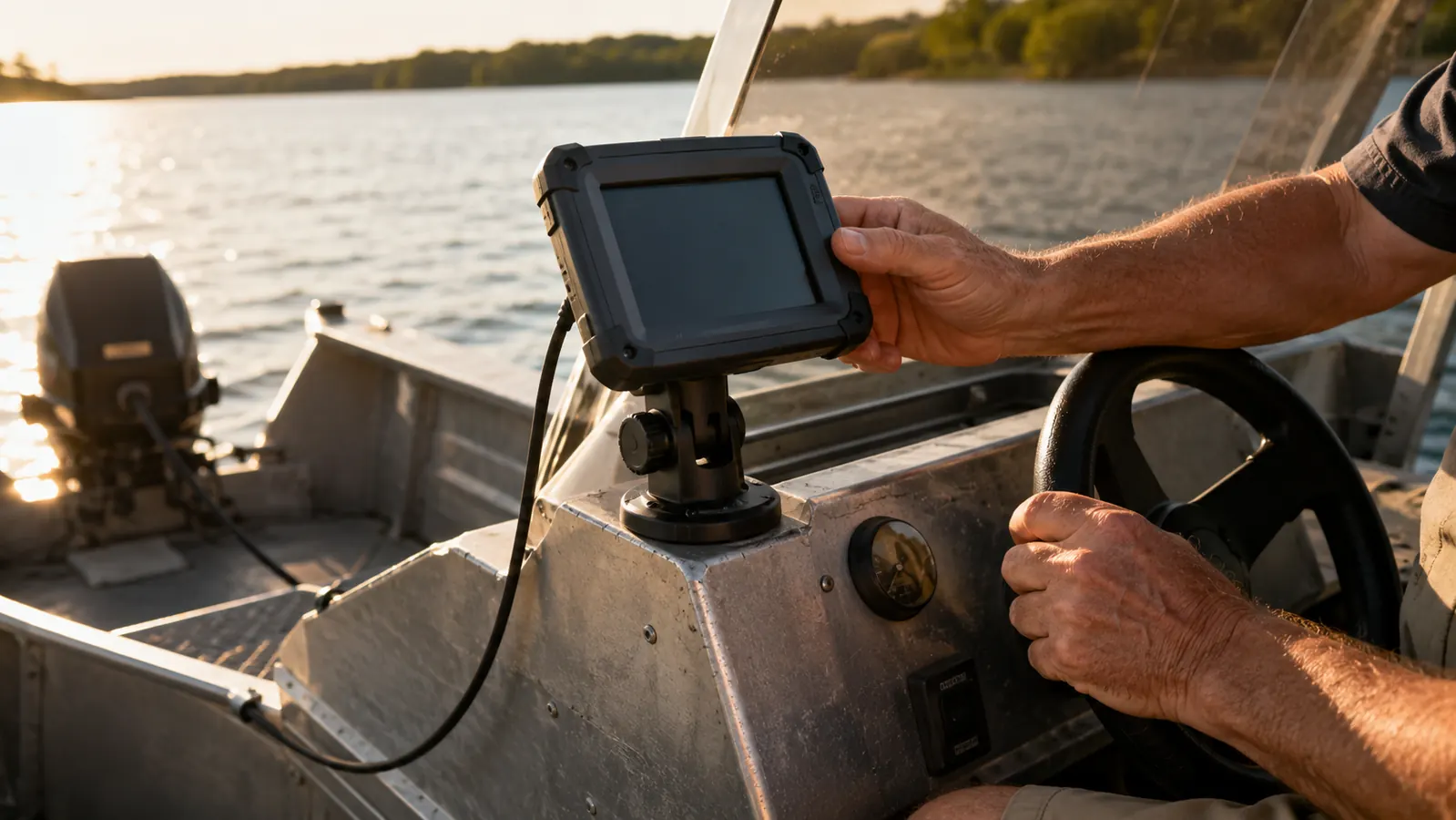
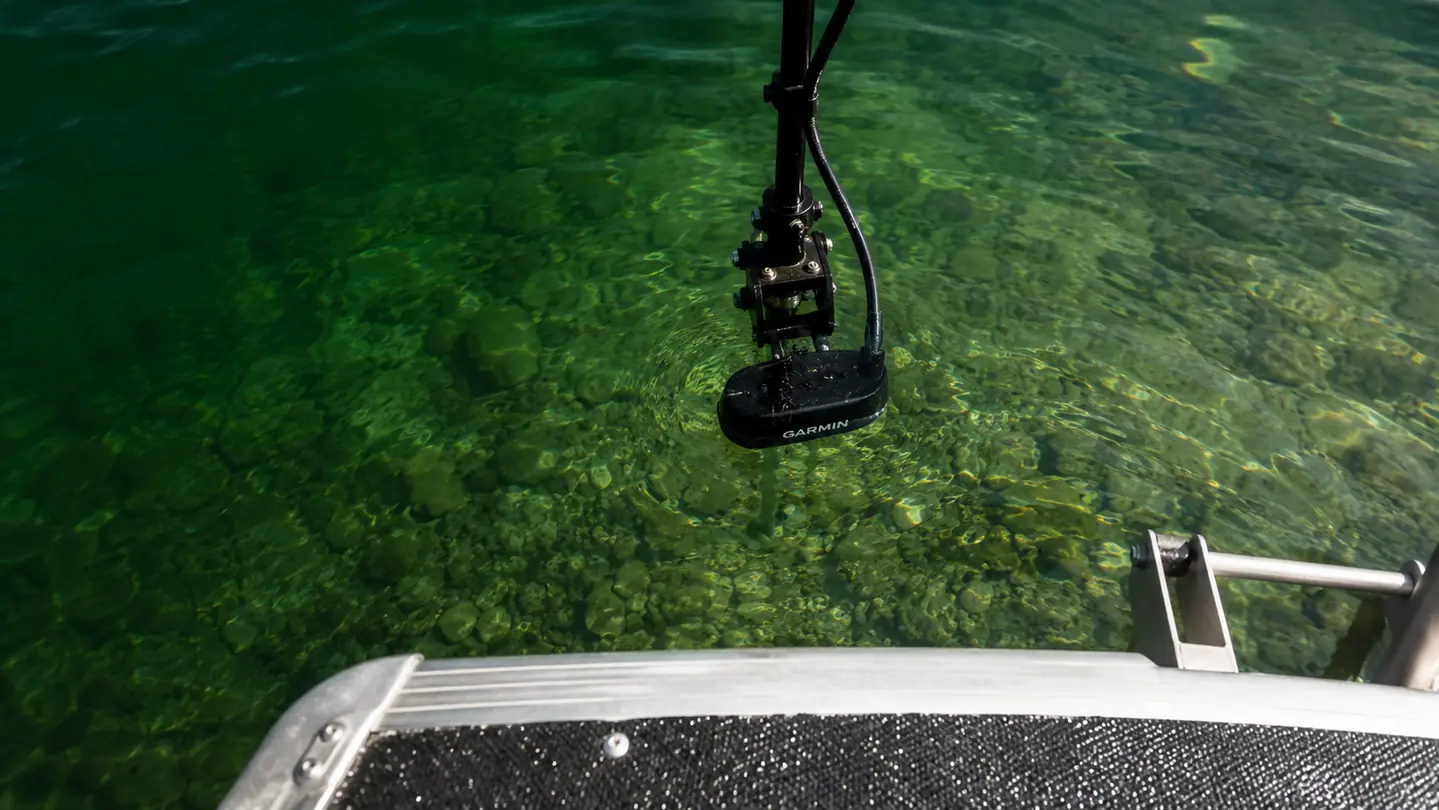
The Striker 4 has lived on the bow of my 16-foot aluminum V-hull since March of 2024. It is mounted with the swivel bracket that comes in the box, and the transducer is clamped to the transom with the included mount, so no drilling was required. I run the power cord to a small battery box up front, and the whole rig takes about twenty minutes to set up. That matters to me, because I am the kind of guy who reads instructions only after the first attempt goes sideways, and even I got it right the first time.
In two seasons it has been used for everything I fish for. Early spring crappie on the river, where I idled along the old channel and watched the screen light up with bait balls over brush. Summer jugline nights for catfish, where I marked the deep holes in the dark and went back to them all season. Fall smallmouth on the lake, where the GPS saved every rock pile and drop-off I found. I do not use it to troll or run structure at speed. I use it to find the spot, drop the anchor, and fish it until the fish tell me to move.
The settings I actually use are few. I keep it on the traditional sonar view most of the time, with the 77/200 kHz dual beam on. The Chirp setting is a separate mode, and it is where the Striker 4 shows its best side. I do not touch the menus much anymore, because the thing I wanted out of a fish finder was simple: show me the bottom, show me the brush, and remember where I found it. It does all three without fuss.
The Sonar: Chirp That Earned Its Spot
The sonar is the heart of this unit, and it is genuinely good for the price. On the traditional view, the bottom comes in as a solid line with a second band where the mud gets soft, and I can see a brush pile at eighteen feet as a cluster of marks rising off the bottom. When I switched to the Chirp view, the same brush pile separated into individual returns, and I could pick out the trunk and the branches well enough to know which side to drop the anchor on. That kind of detail used to cost a lot more money.
The key is what Chirp does that the old single-frequency units do not. Instead of one narrow pulse, it sends a sweep of frequencies and combines the returns, so the picture is sharper and it separates fish from structure better. On the Striker 4 it is a simple on/off toggle, which is exactly how I like my electronics. I leave the depth range on auto, and it keeps up fine from three feet of gravel bar up to sixty feet of open lake.
Once you know what you are looking at, the screen becomes a story. A fish sitting on the bottom shows as a mark that holds its depth instead of rising or falling. A school of bait shows as a cloud of dots mid-water, and when you see that, the bigger fish are usually underneath it. I learned to trust the arch: a clean arch means a fish passing through the cone, and a flat line of returns right on the bottom is usually a fish holding tight to cover. You pick this up in an afternoon, and it is why I call the screen my second set of eyes.
A couple of honest notes. The 3.5 inch screen means you are reading a small picture, and at speed it gets hard to pick out details. I also found that the sonar needs the transducer to sit level in the water, so the first time I ran the boat, the readout fluttered until I tilted the puck half an inch. Once it was level, it has been rock solid. That is the kind of thing that is in the manual and that none of us read.
The GPS: It Remembers What You Find
The GPS is the reason I will not go back to a plain sonar. The Striker 4 does not come with a chart or a map card, and I want to be upfront about that, because some listings make it look like a chartplotter. It is not. What it is, is a clean grid screen that lets you drop a waypoint wherever the boat is sitting, and that is the feature that changed my fishing more than the sonar did.
Here is what that looks like in practice. In May of last year I found a brush pile on the lake that held crappie, dropped a waypoint, and went on with my day. In November I idled back to that same spot, watched the GPS bring me to within a few boat lengths of the mark, and put eleven fish in the cooler in the first hour. Without the waypoint, I would have spent that morning re-finding a pile of brush that looked like every other pile of brush on a thirty-thousand-acre lake.
The GPS is simple to the point of being bare. You press a button to drop a mark, the unit names it, and you can save a track of where you have been. There is no map underneath, no lake contours, no way to plug in a card and see the bottom you are about to cross. You are building your own chart from scratch, one trip at a time. For me that is a feature, because the spots I care about are my spots. For someone who wants a ready-made map, it is a reason to look elsewhere.
One more thing the GPS does that I did not expect to use: it keeps a track of where you have been. On jugline nights, when the bank starts to look the same in every direction and the coon hounds are the only thing telling you which way home is, I flip to the track screen and idle right back along the same line I came in on. I have gotten turned around on that river more times than I care to count, and the Striker 4 has been the difference between a late night and a real emergency.
The Screen and the Buttons: The Real Tradeoff
Now the part I have to be straight about. The screen is small. Three and a half inches diagonal is a phone screen from a few years ago, and when the sun hits it straight on, you are going to shade it with your hand to read it. I have a routine where I pull the bill of my cap down and lean over it. It is not a dealbreaker, but it is the difference between this and a unit that costs twice as much, and pretending otherwise would not be honest.
The menus take some learning too. The Striker 4 runs the old-style Garmin menu system, a stack of options you page through with the arrow pad, and it can feel like a lot of poking to change one setting. You will not use most of it after the first month, because you will settle on a view and leave it there. But on the first couple of trips, you will curse the button sequence once or twice while you hunt for the backlight setting.
The other thing I would warn you about is the power connection. The unit draws very little, and it has run all day on the same small battery I use for my trolling motor. But the cable connects to the back of the unit with a twist collar that takes more force than you expect, and I have heard the same complaint from two friends who bought one. Seat it firmly once and leave it alone, and you will never think about it again.
Two Seasons of Weather and Wear
For what it is worth, mine has not missed a trip in two seasons. It has baked in July sun, taken rain squalls, and spent nights in a boat that sat uncovered in my yard. The screen has no scratches worth mentioning, the buttons still click, and the transducer has never once come loose. I did replace the power cord connector once, because the little collar that seats the cable to the unit is fiddly, and I cracked it with my own carelessness. It is a standard part and cheap to replace.
The one weather complaint I have is glare, not water. In bright sun the screen washes out unless you angle it right, and the swivel mount helps but does not fix it. I keep a strip of Velcro on the dash so I can tilt it into the shade of the gunwale. None of that has ever kept me from seeing the bottom, and that is the whole job.
The backlight is worth a word too. At night the screen does not blind you the way some units do, and the red night mode is easy on the eyes when you are checking a waypoint at midnight. I do most of my catfishing in the dark, so that small detail has gotten more use than I expected. It is one of those things you do not think about until you are sitting in the black with a lantern and a screen that is too bright to look at.
What I Liked
- Clear Chirp sonar at a price that does not scare you off
- Built-in GPS with one-button waypoints that remember your spots
- Transducer and mount included, no drilling to install
- Simple enough for someone who does not read the manual
- Has taken two seasons of sun, rain and neglect without quitting
Where It Falls Short
- The 3.5 inch screen is small and washes out in direct sun
- No built-in maps or lake contours, just a blank grid
- Menu navigation takes some poking the first few trips
- No way to share waypoints with your phone or network a second unit
I marked a brush pile in May of last year, and in November the GPS put me right back on top of it. Eleven crappie in the first hour. That was the unit doing its job, not luck.
Who This Is For
If you fish a small boat, a kayak, or the bank, and you have spent more mornings than you can count fishing water that turned out to be empty, the Garmin Striker 4 is for you. It is built for an angler who wants to find the fish, mark the spot, and come back to it, without learning marine electronics or paying a subscription for the privilege. If that is you, this unit will pay for itself in skipped dead water before the season is out.
Who Should Skip It
If you want a ready-made lake map with contours and navigation, this is not it. If you run a bigger boat and want a screen you can read from the helm at speed, this is not it. And if you want to share waypoints with your phone or network two units together, the Striker 4 does none of that. Those are real limits, and there are units that do them, for a lot more money. Buy the Striker 4 for what it is: a clear, simple, honest sonar and GPS that does the basics better than anything near its price.
The Two-Season Verdict
Here is my bottom line. The Garmin Striker 4 does not have the biggest screen, the prettiest map, or the fanciest networking, and I have been honest about all of it. What it does have is clear Chirp sonar, a GPS that remembers the spots you worked to find, and a price that leaves you money for gas and bait. For a small-boat angler like me, that is the whole ballgame, and it is why this unit has a permanent spot on my boat.
Fish the Spots You Already Found
Two seasons in, the Garmin Striker 4 is still bolted to my boat and still doing the one job I bought it for. If you are ready to stop guessing where the fish are, check today's price on Amazon and start building your own map of the water.
Amazon Check Today's Price on Amazon →