
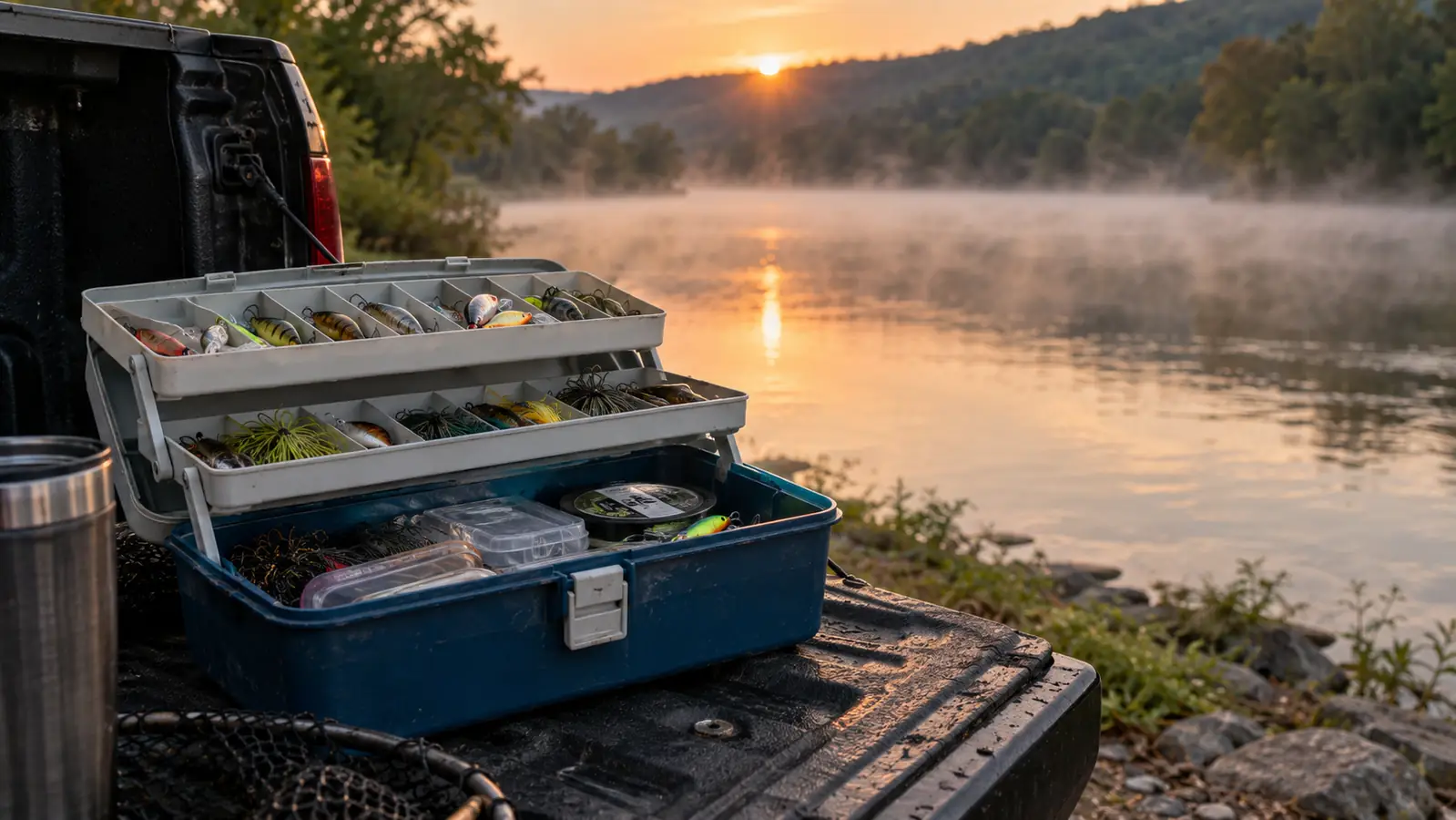
Every angler I know has a tackle box that has quietly turned into a junk drawer. Mine was a soft-sided bag the size of a small cooler, and by the third season it held rusted hooks, six loose single spinnerbaits, three packs of worms melted into one, a handful of split shot I never used, and no way to find any of it before the light changed. I lost a whole morning bite on the Current River digging for one white spinnerbait while a smallmouth kept rolling on the bank in front of me. That was the trip I switched to a Plano three-tray tackle box and built the system I still use today.
The point of any tackle box is to put you back on the water faster, not to give you more places to lose things. This article is the tray-by-tray system I run with the Plano three-tray box, the one that has kept me organized through a full year of smallmouth on the river, crappie in early spring, and jugline nights for catfish in the summer heat. It is not about owning more gear. It is about knowing exactly which tray to open and which compartment to reach into in the three seconds before the fish decides.
If your box is a mess right now, do not buy new tackle to fix it. Empty the one you have and sort it with the steps below. I did this on a rainy Sunday in February, and it took about an hour and a half, most of it spent convincing myself I did not need the lures I was about to throw away.
Stop Digging. Start Fishing.
The Plano three-tray tackle box gives every lure a home and every trip a faster start. Check today's price on Amazon and set up your trays this weekend.
Amazon Check Today's Price on Amazon →Step 1: Empty the Box Completely and Sort Into Five Piles
Pull everything out. Every lure, every hook packet, every split shot, the three bobbers you forgot you owned, the snapped spinnerbait you meant to toss last spring. Do this on a table or a tailgate in good light, not on a boat deck at first light. Lay every piece down flat where you can actually see it, because the whole job is about seeing what you really carry. Give yourself room to work, since a box sorted on a crowded tailgate is a box you will not sort at all.
Now sort into five piles. Pile one is the lures you reach for every trip, the ones you would not start a day without. Pile two is the lures you reach for on a good day, when the conditions are right. Pile three is soft plastics, sorted by type so a bag of worms is not sitting on a bag of creature baits. Pile four is terminal tackle: hooks, weights, swivels, bobbers. Pile five is the trash pile.
That trash pile matters more than any other. If a hook is rusted or a plastic has melted, throw it out right there. If a crankbait has lost a bill or a spinnerbait has a bent frame, it goes too. Every piece you keep is a piece that will be in your way later, and every piece you throw away is a decision you never have to make again.
Step 2: Tray One Is Your Money Tray
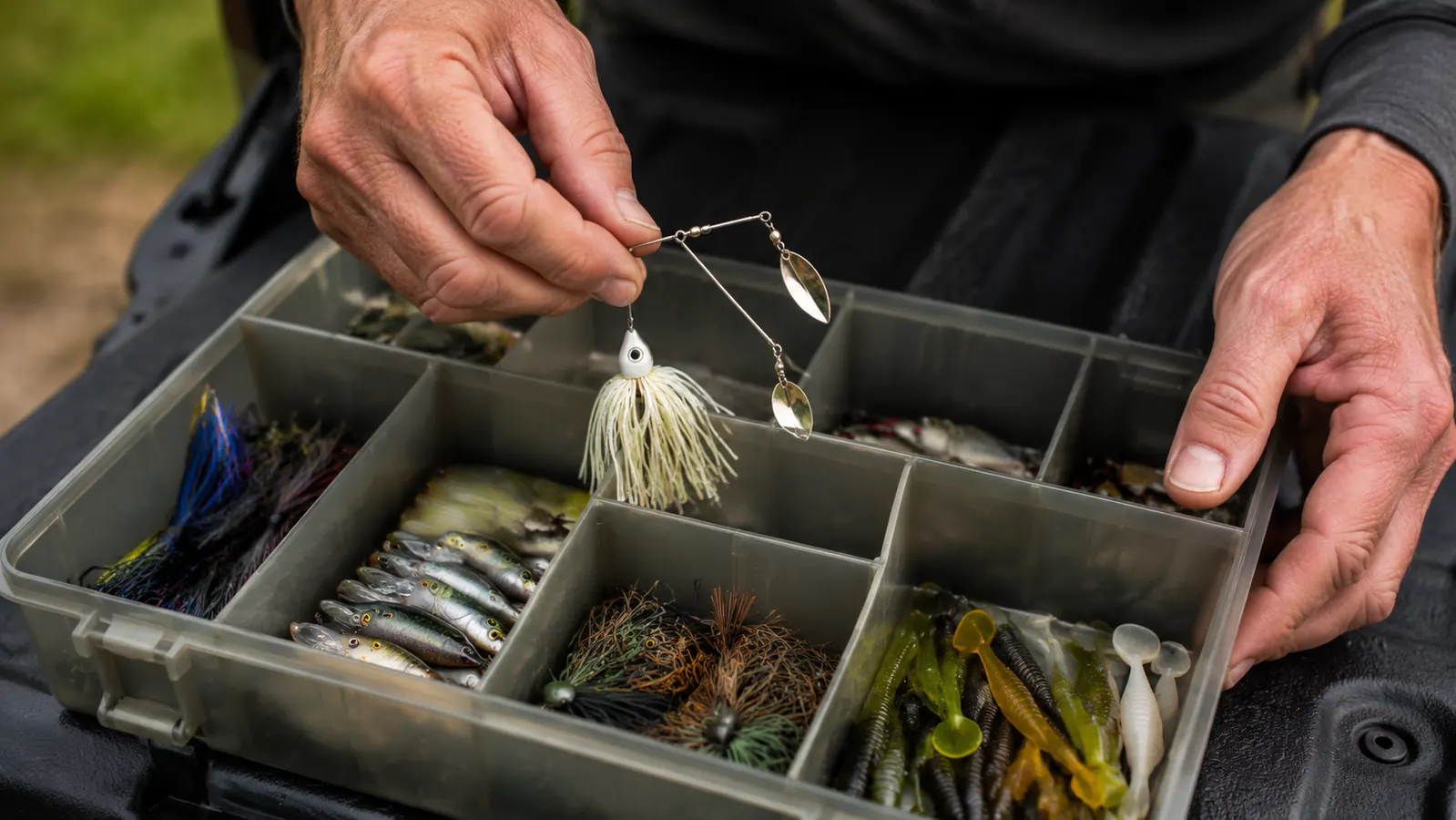
The top tray is the one you open first, and it should hold the lures you actually fish, not the lures you someday might. In my box, tray one carries a white spinnerbait that catches smallmouth on the Current, two shallow crankbaits in crawdad colors, and a small utility box of the jigs I throw for crappie in March. For a bass angler that tray might be worm hooks and a pack of PowerBait worms. For a catfish guy it might be snell hooks and a couple of sinkers. The whole idea is that the box opens to the answer, not to a question.
The rule is hard: if you have not used a lure in the top tray in three trips, it does not belong there. Trade it down to tray three and move something you actually reach for up into its place. The top tray should never need digging. It should be the tray you could open in the dark, by feel, while a fish is on.
I also point every hook in the top tray the same direction, so when I open the lid I am not meeting a wall of trebles. It takes five seconds to lay them in straight, and it is the difference between a quick grab and a fumble.
Step 3: Give Terminal Tackle Its Own Tray
Nothing turns a box into a rat's nest faster than loose hooks and weights rolling around with the lures. The middle tray of the Plano three-tray box has compartmented rows built for exactly this, and that is where all my terminal tackle lives. Hook packets go in one row, worm weights in a second, swivels and snaps in a third, bobbers in the fourth. I keep a small hook file in the corner of the same tray so I can touch up a point while the water is flat. That way, when the bite turns on, terminal tackle is not the thing slowing you down.
This is the tray that quietly saves you money. When every hook size has a row, you stop buying a new pack every time you cannot find a 2/0 at first light. And on a jugline night, when I am reaching by feel on a dark bank, a box with a terminal tray I can navigate without a headlamp is worth far more than what it cost.
One rule here: if a hook packet is down to two hooks, throw the packet and put the hooks loose in the row. Half-empty packets are how you end up with six half-empty packets and no full ones.
If you fish more than one species, give the terminal tray rows by species. A smallmouth row with 2/0 EWG hooks, a crappie row with eighth-ounce jig heads, a catfish row with big snell hooks and sinkers. A strip of tape and a marker labels each row, and it takes ten minutes to rework the whole tray when your seasons change.
Step 4: Tray Three Holds the Second-Chance Lures
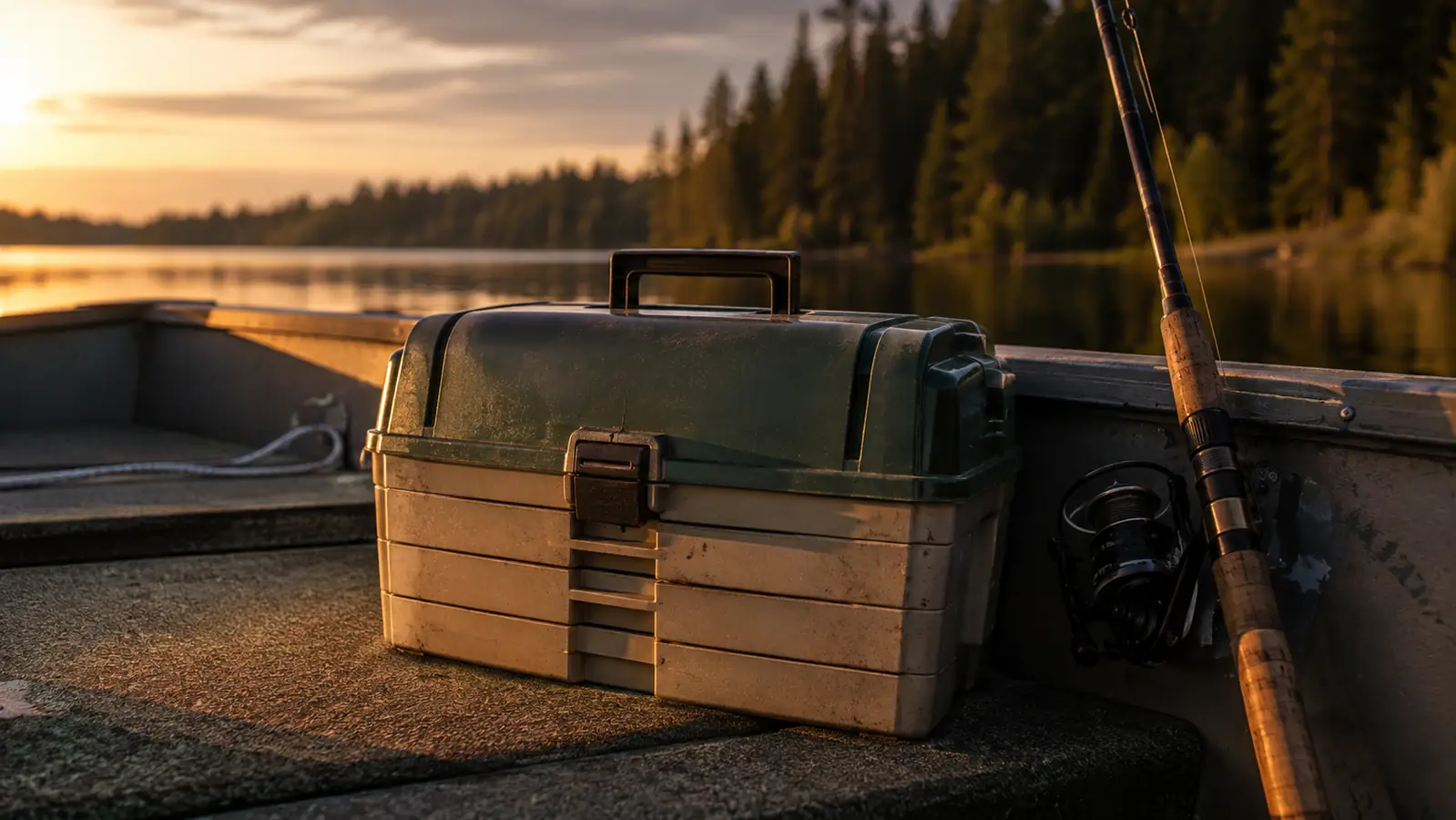
The third tray is for the lures that are not everyday but still have a day. The deep-diving crankbait you tie on when the fish have pushed off into the channel. The topwater that only comes out in the low light of a summer evening. The extra spinnerbaits in the colors that work on the two big lake trips I make a year. This tray is your bench, and it has to stay honest too.
If a lure has not seen water in two seasons, it either goes to the trash pile or to a buddy who will actually fish it. I have a nephew who has received several of my bench lures, and he has caught more on them than I did. Keeping tray three small is what keeps tray one fast.
When the everyday tray stays small and tight, the box never becomes a graveyard. It stays a working tool you can close in the dark and know exactly what is inside.
Step 5: Put Soft Plastics in the Deep Bottom and Add a Reset Rule
The Plano three-tray box has deep storage under the lift-out trays, and that is where soft plastics belong. Stand the packs on edge, sorted by type, and keep scented baits like PowerBait worms away from unscented ones, or the whole bottom of the box starts to smell like one big bait. Plastics left loose in a bottom tray end up hooking each other and tearing. A pack of worm hooks and a small bottle of scent can ride down there too, so you are not hunting for a hook when you finally get a bite.
Then add the one rule that keeps the whole system from sliding back into a junk drawer: the reset. Every time you get home from a trip, spend the three minutes putting each lure back in its row before you do anything else. I do it while the boat drains and the rods go back in the truck. It is the cheapest upgrade in fishing, and it is the only reason my box looks the same in September as it did in March.
Skip the reset once and the box slides a little. Skip it three times and you are back to digging for a white spinnerbait in the dark. Three minutes after the last cast beats thirty minutes before the first one.
The deep bottom is also where the backups live: an extra spool of PowerPro line, a couple of spare snaps, and a pocket knife I only use for fishing. These do not get touched often, so they stay put down there, and keeping them out of the top trays is what keeps the top trays light.
What Else Helps
A few small additions make the system hold up better through a season. A spinnerbait wallet keeps the trebles from grabbing the tray dividers and tangling the row. A pack of silica desiccant in the deep bottom catches the moisture that rusts hooks overnight. And I always wipe down wet lures before they go back in, which takes ten seconds. The brass latch on the Plano box has never given me trouble, but I still give the hinges a shot of the same silicone I use on my reel seats once a year.
I also keep a smaller box in the four-wheeler for bank trips, so I am not hauling the big rig when I only need an hour on the river. It carries one spinnerbait, two crankbaits, a small pack of hooks, and a few split shot, the same four things every time. The big Plano box stays in the truck for boat days, and the small one means I am never tempted to skip a trip because the gear is not handy.
One more thing worth doing: write the date in permanent marker on the underside of the lid when you set the box up. Six months later you will know exactly how long the system has held, and you will know it is time to redo the sorting before it gets bad.
I do the reset while the boat drains and the rods go back in the truck. It is the only reason my box looks the same in September as it did in March.
The Payoff
The real test of this system came on a July night jugging for cats. I needed a 5/0 hook and a two-ounce weight in the dark, and I found both in the middle tray without turning on a light that would have spooked the bank. Two weeks later I was on the Current before sunup, opened tray one, grabbed the white spinnerbait, and was casting before the mist burned off.
That is what a three-tray box is for. Not storage. Speed. The Plano three-tray box holds a season of fishing and puts every piece where your hand already knows to go.
A box you trust does more than save time. It gets you on the water more often, because there is no excuse standing between you and a rod. That is the whole point of organizing your tackle, and it is the cheapest fishing upgrade I know.
Build Your Own System This Weekend
The Plano three-tray tackle box is the backbone of everything above. Check today's price on Amazon, empty your old box, and give every lure a home before your next trip.
Amazon Check Today's Price on Amazon →