
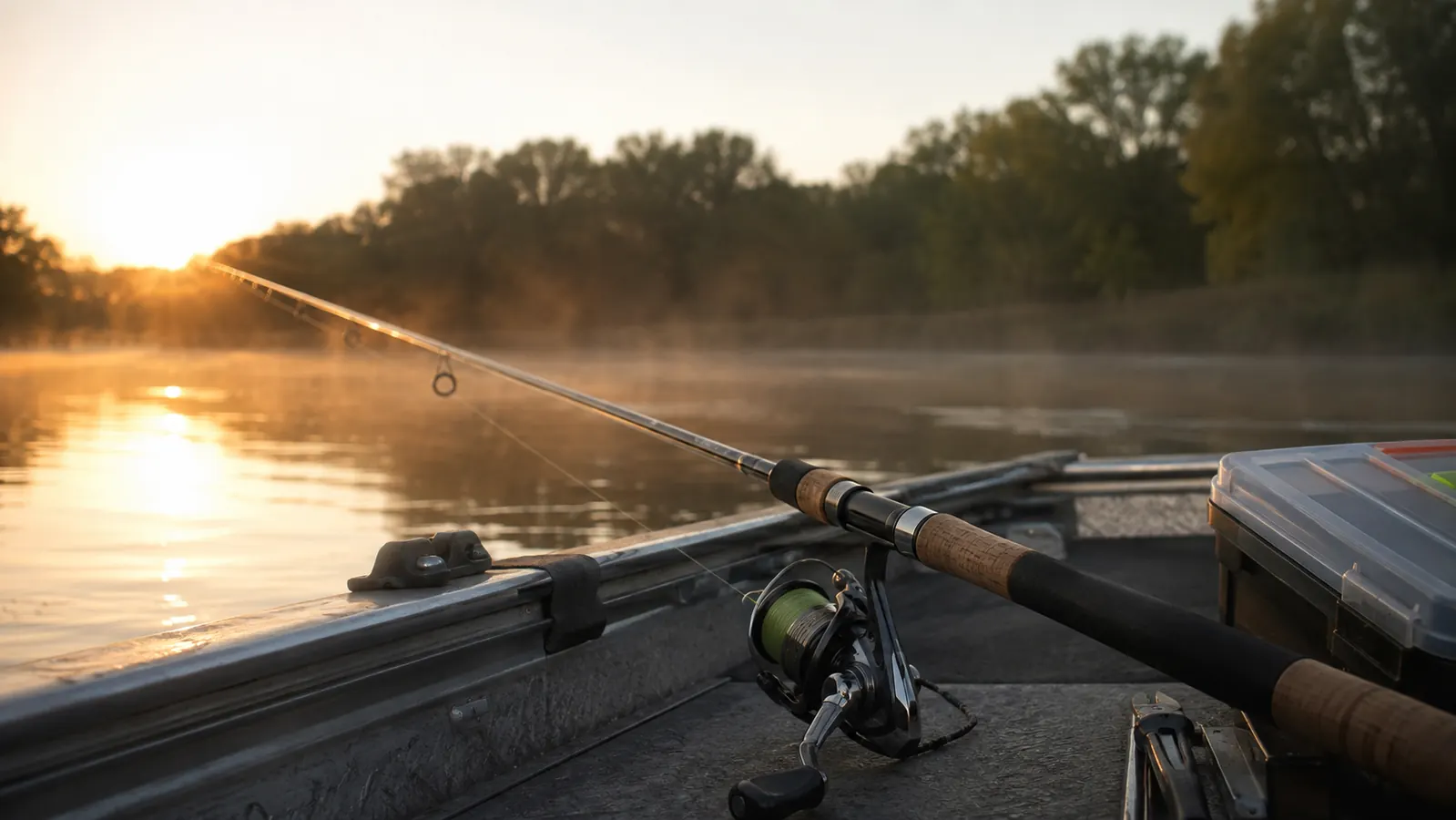
Two years ago I finally got tired of retying. Every weekend on the river, the mono on my spinning reels would wrap around a rock or drag through a laydown and come back frayed, and I would burn the good part of a morning cutting line and starting over. So I spooled up with Power Pro braided line, the same stuff every guide I know runs, and told myself I was done with it. Two years later I am still spooled with Power Pro, which is the strongest thing I can say about any line I have ever bought. But I am going to be straight with you right now: it has not been the painless ride the package makes it sound like, and the parts nobody puts on the box are the parts you actually need to know.
The color fades. The line holds water on a cold morning. The clinch knot that held mono for me since I was a kid will slip on braid until you learn a better one. None of that is in the marketing, and none of it is a reason to avoid the line. It is the difference between what the package promises and what actually happens on the water, and I would rather tell you the second part. That is what an honest review is for, and it is the whole reason this one exists.
The Quick Verdict
Power Pro is still the braid I spool first after two years of hard use. It fades, it holds water, and it demands a better knot, but it has outlasted every mono I ever bought and it is the only line I trust in the snags.
Amazon Check Today's Price →If you are tired of retying mono, this is the spool that ended it for me
After two years and three reels, Power Pro is the braid I reach for first. Check today's price on Amazon and see if it fits the reels you already own.
Amazon Check Today's Price on Amazon →How I've Used It
My test has not been scientific, it has been a life. The first spool went on a 2500-size spinning reel I use for smallmouth on the river. That same line has caught smallmouth in the spring, crappie off the bank in March, and catfish on juglines in July. It has dragged through gravel, wrapped around cedar limbs, and been chewed by a gar that had no business biting a spinnerbait. I replaced that line once, not because it broke, but because after a season and a half the last twenty feet looked like it had been through a washing machine. Everything else on that reel, the rod, the reel body, the drag washers, I have had to replace or service in that time. The line was not the weak link.
The second spool went on my casting reel for bass, and the story is the same. I run 30-pound test on spinning and 40 on the baitcaster, which is thinner than the mono I used to run, so I fit more line on the same reels. That part of the PowerPro promise, the thin diameter, is true and it matters. A spool of 40-pound PowerPro has about the diameter of the 12-pound mono I used to run, and you can feel the difference in casting distance and in how much line you have when a big fish makes a run.
I also put 10-pound PowerPro on my daughter's little spin combo so she could cast a small rooster tail without the wind knots she fought with mono. It casts better and it has held up to a season of snags along the bank. It also wind-knotted on her once in a way mono never did, which is where the honest part of this review starts. That wind knot was mine to fix, not the line's, and I will get to it in a minute.
What Nobody Tells You About the Color
Let me start with the thing I had to learn the hard way. The color on Power Pro does not stay. The first few trips the line comes off the spool bright and easy to see against the water, which is the point of the visible colors, but that finish wears. After a season of rubbing rocks and timber, the color thins in spots and the line turns pale where it took the abuse. That is actually useful. A pale spot is a billboard telling you where to cut and retie before the line fails, and I have learned to read it like a gauge on my dash.
The honest way to say it is this: the color is a wearing surface, not a dye that goes all the way through. The places that rub, the rocks and the wood and the gravel, they take the color off first. When I see a pale stretch of line, I do not worry that the line is weak. I worry that it has been through a fight, and I cut it back and retie before it sees another one. That habit has saved me more fish than any fancy knot, and it is the closest thing to a maintenance schedule braid has.
The other thing nobody tells you is that braid holds water. On a July afternoon that does not matter. On a January morning when the river is 38 degrees and the guides are icing up, you can feel it. The line comes off the spool wet and the first cast is heavier than it should be. It is a minor thing, but it surprised me, because the marketing sells braid as weightless and it is not quite, and a wet line on a cold morning is the honest version of that.
The Knot Problem Is Real
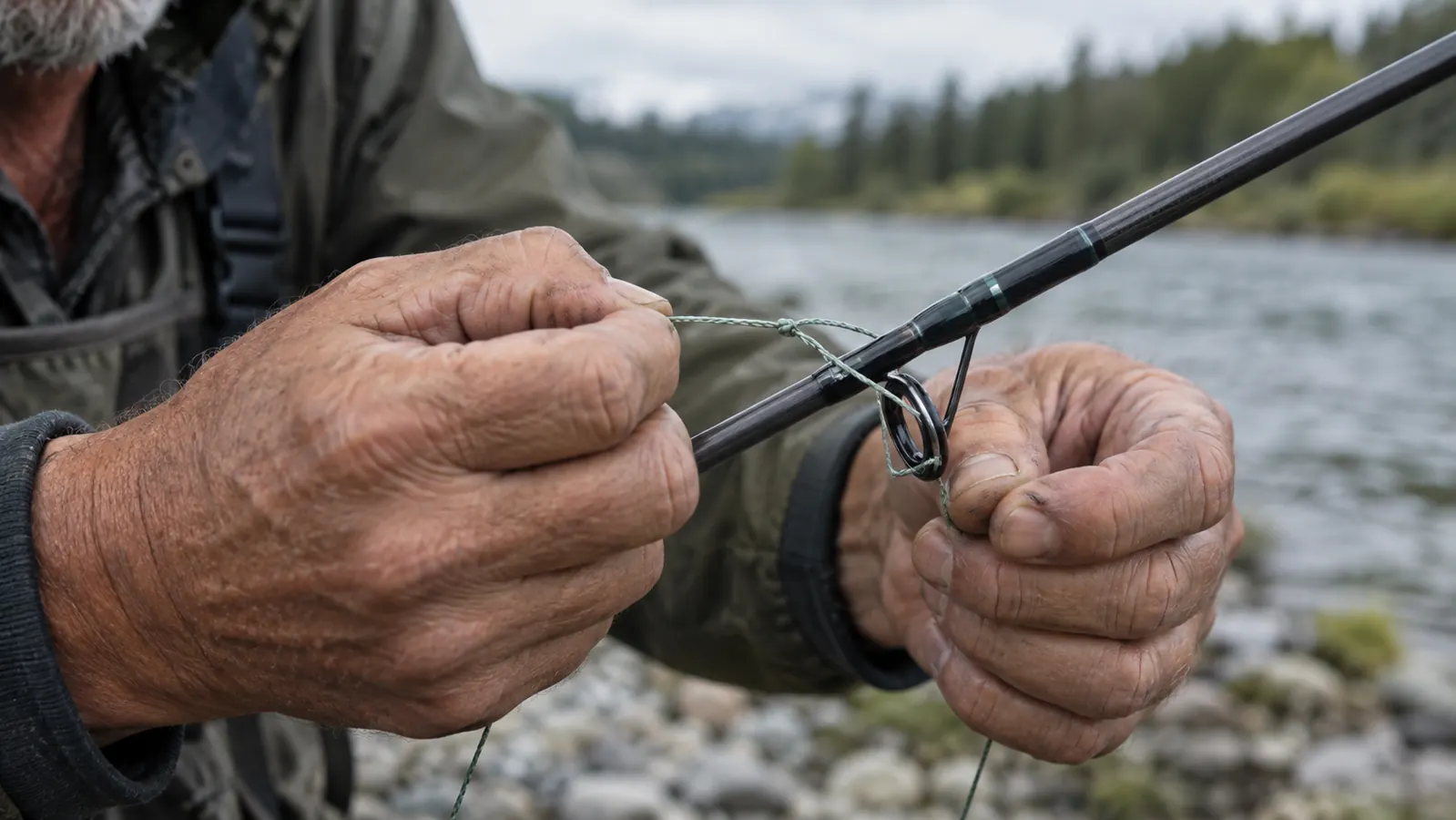
Here is the one that made me cuss the line the first month. The clinch knot that I had tied since I was twelve will not hold PowerPro. Braid is slick, round, and unforgiving, and a clinch knot pulls through on a hard hookset. I lost a good smallmouth that way before I learned. The fix is a Palomar knot, which takes ten seconds to tie and has not failed me since. If you spool up with PowerPro and do not change your knot, you will blame the line for what is actually your knot, and the line does not deserve that.
That is the honest version of every braid complaint I have heard from guys who swear braid is junk. Wind knots, slip knots, line digging into the spool, it almost always comes back to how the line was spooled and how it was tied. Spool it tight and even, wet it down as it goes on, learn the Palomar or the uni, and nine out of ten problems disappear. I wrote out the whole spooling method in a separate how-to, but the short version is that tension matters more than anything else you can control.
I tie a Palomar for almost everything now, from a 1/16-ounce crappie jig to a big swim bait, and I have not had a knot fail in two years. That is not a line claim, that is a habit claim. The line will do its job if you do yours, and that is the part nobody puts on the box because it is not a reason to buy anything. It is just the truth.
Now for the wind knots, because they are worth naming on their own. On a gusty day, a slack loop of braid can fold over on itself and cost you a few minutes of picking. The less line memory a braid has, the more it wants to float and tangle when it goes slack. The fix is to keep tension on the line as it comes off the reel and to never let a big loop go slack between the reel and the rod. Once I learned that, the wind knots stopped, and the line went back to being a pleasure.
Where the 'Zero Stretch' Pitch Oversells
PowerPro sells the no-stretch story hard, and it is mostly true. You feel a bite on braid that mono turns into mush. A walleye that taps a jig on the bottom, you feel it in your fingertips before you see the rod tip move. That sensitivity is real and it is the reason I keep a braid spool on my ice rod and my finesse rod. But no stretch cuts both ways, and the marketing does not spend much time on that half of the story.
There is no give in the line, so a hookset that is too aggressive on a long cast can rip a small jig out of a fish's mouth, and a heavy crankbait digging at the end of a long cast has no shock absorber built in. I have pulled hooks on more than one fish that I am certain I would have landed on mono, because the mono would have stretched and let the hook turn in the corner of the jaw. It is a trade, not a pure upgrade, and pretending otherwise is how you lose fish and blame the line.
The workaround is the one every old timer uses and the marketing forgets to mention: a leader. I run about two feet of fluorocarbon between my PowerPro and the lure on clear water and for anything that needs a little forgiveness. The braid gives you the casting distance and the sensitivity, and the leader gives the fish something less visible and the hookset a little give. You give up the pure no-stretch idea, but you catch more fish, which is the only metric that counts. I have a whole article on the leader setup, but the short version is that two feet is enough.
A pale spot on PowerPro is the line telling on itself. That worn color is not the line giving out, it is a billboard saying cut here and retie before it fails.
The Fray, the Spool, and When to Cut It Back
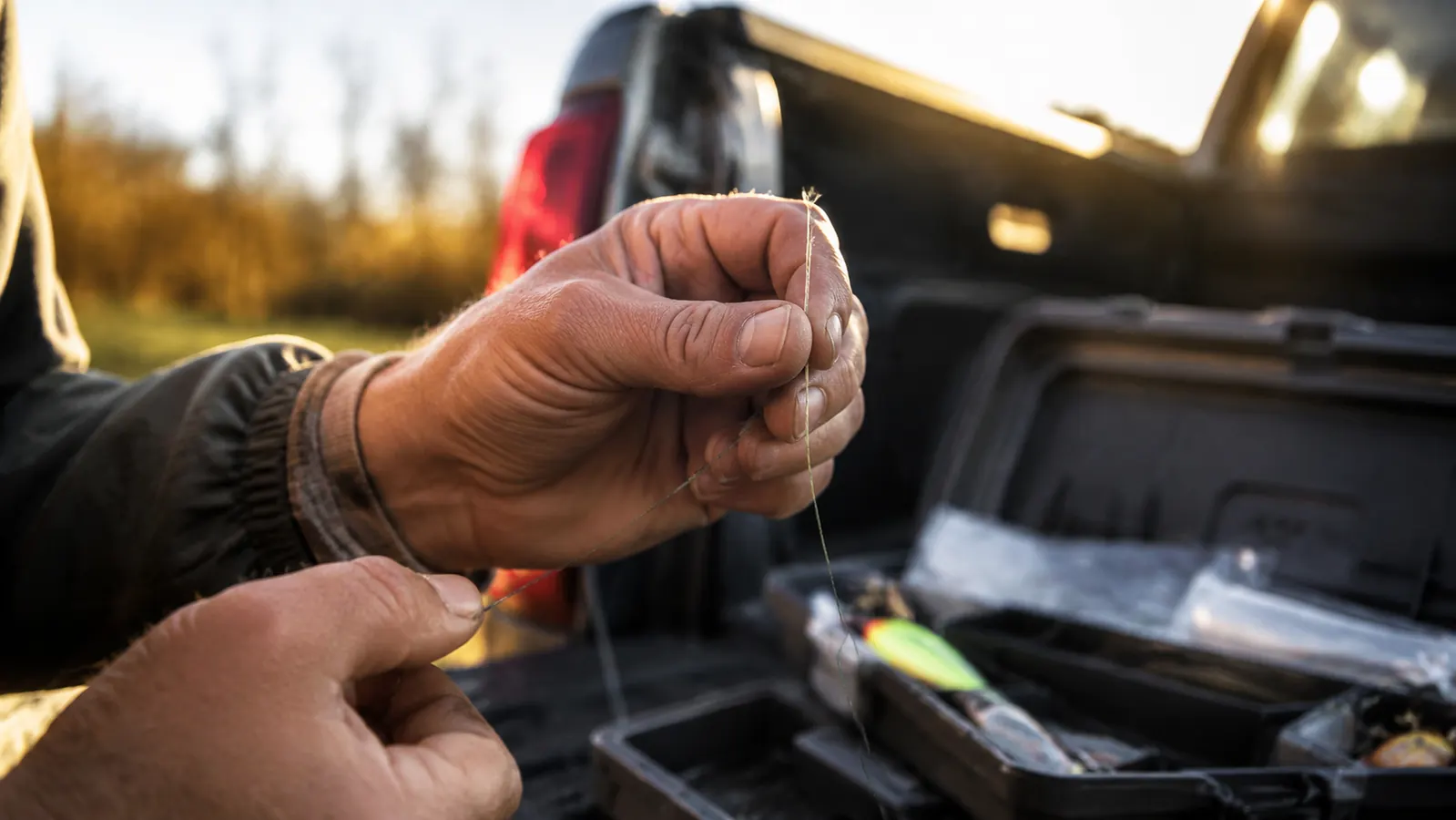
Two years in, my honest answer is that the line does not break before you can see it coming. The spots that rub hard, the color wears and the fibers start to look fuzzy. I check the last ten feet before every trip now, and I cut back anything that looks fuzzy. A spool of PowerPro lasts me a long time because I trim instead of replace. The line that is left on the reel after two years is still round and still casts, and it is the same line that has landed more fish than any mono I ever bought in twice the time.
The line also digs into itself on the spool under heavy drag, which is a real thing with braid on a baitcaster. A big fish that pulls line off while the drag is tight will bury the line into the spool below it, and the next cast can backlash like a nest of fishing line. The fix is a mono or tape backing so the braid has something to bite into, and re-spooling tight. I will tell you straight, the first spool I put on without backing cost me a backlash on a big catfish, and it was my fault, not the line's.
Now for the part I enjoy the most. PowerPro casts like nothing else I have run on the same reels. Because it is thin for its rating, it leaves the spool clean and quiet, and it sails. On a breezy day I can reach a bank with a small spinnerbait that mono would have dropped in the weeds twenty feet short. The first time you strip out a long cast with braid, you will understand why guides make the switch and never go back to a full mono spool.
The Value Question Nobody Does the Math On
A spool of PowerPro costs more than a spool of mono, and nobody should pretend otherwise. But here is the math that matters over two years. I used to go through three or four spools of mono per reel per season because I would cut back frayed line after every trip. With PowerPro I trim the last few feet a handful of times a season, and I have yet to spool a fresh reel with a full spool of the stuff in two years on my main rod. That is the number that matters. I laid out all ten reasons I made the switch from mono in a separate listicle, and the cost over time was high on that list.
So the upfront cost is higher and the per-season cost is lower, as long as you check the line and trim instead of letting it fail. That is the honest version of the value story. The line is not magic and it is not free, but it is the cheapest durability I have found in fishing gear. If you fish often enough to be reading a line review at all, it probably pays for itself by the second season, and then it just keeps going.
What I Liked
- Thin diameter for the rating, so I fit more line on every reel and cast farther
- Abrasion resistance that has taken rocks, timber, and a gar and kept catching
- Sensitivity you feel in your fingertips on a slow bottom bite
- Holds up for a season or more with trimming, so the cost per trip drops
- Casts clean and quiet once it is spooled tight
Where It Falls Short
- The color fades and thins where the line rubs, so you are always checking the last few feet
- Holds water on cold mornings; the first cast is heavier and ices up faster
- Clinch knots slip, so you have to learn the Palomar or the uni
- No stretch means hooksets need a lighter touch and a leader on clear water
- Costs more up front than a spool of mono
Who This Is For
Power Pro is for the angler who fishes structure, who has lost one too many fish to a mono breakoff in the brush, and who is willing to spend ten minutes learning the Palomar knot. It is for the bank fisherman who wants to cast a jig a country mile, the catfish guy who needs line that can take a big fish into the timber, and anyone who is tired of respooling every other weekend. I compared PowerPro head to head with SpiderWire for a season, and that write-up has more of the nitty-gritty, but the short version is that this is the spool I would grab first. If that sounds like you, this is the line, and I think you will be happy with it.
Who Should Skip It
If you fish ultra-clear water for finicky fish and hate the idea of tying on a leader, mono or fluorocarbon is the easier road. If you are a beginner who has not learned the Palomar and does not want to, braid will frustrate you until you do. And if you mostly fish topwater with heavy treble hooks, the zero stretch can pull hooks on a hard hookset. None of that makes PowerPro bad line. It just means the honest answer is not 'everybody should buy this,' and I do not mind saying it out loud.
Two years later, it is still the line I spool first
PowerPro has outlasted every mono I ever bought, and the wear it shows is the kind I can see coming. If you are ready to stop retying, check today's price on Amazon.
Amazon Check Today's Price on Amazon →