
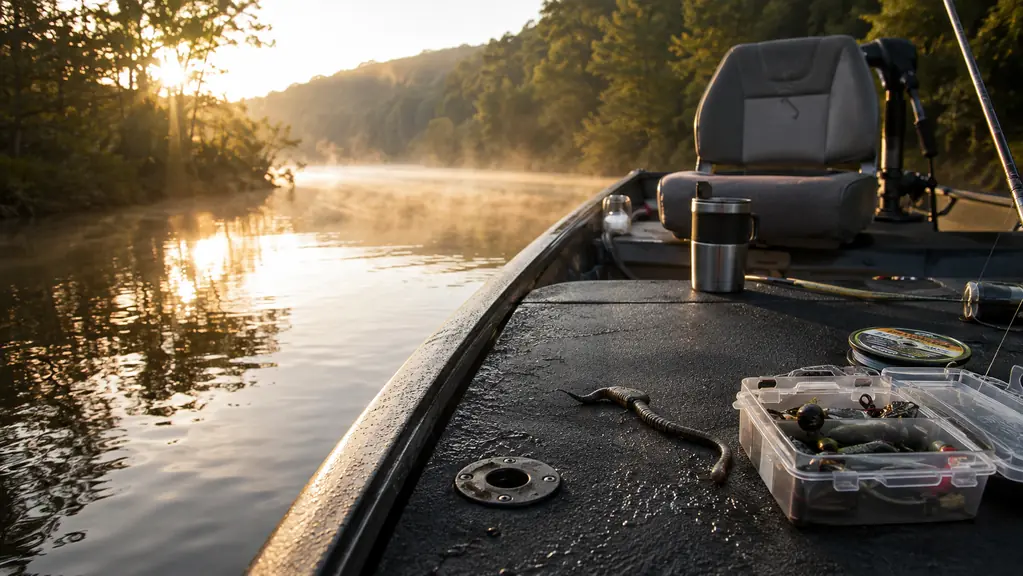
The Texas rig is the first thing I show anybody who asks me about bass fishing. Not because it is fancy, because it is not. It is a hook, a bullet weight, and a soft plastic worm, and it catches fish in the thickest cover on the water. Most folks rig it wrong the first few times, and I was no different. The hook point sticks out and grabs every weed. The worm wads up into a knot. The weight slides down and thumps the nose on every cast. I have done all of it, standing on the bank of the Current River in the Ozarks, cussing a rig I tied in a hurry instead of taking sixty seconds to do it right.
The fix is a little patience and the right bait. I have spent a full season throwing Berkley PowerBait Power Worms on a Texas rig, smallmouth in the river and largemouth on the big-lake trips, and that pair is the reason I reach for the same box every time I head out. The worms are cheap enough that you do not baby them, they carry the scent Berkley packs into every PowerBait, and they take a beating. Here is the exact method I use, step by step, so you can skip the mistakes I made.
Start With a Pack of Berkley PowerBait Worms
The Texas rig is only as good as the plastic hanging off the hook. Berkley PowerBait worms bring the scent and the action that turn a slow afternoon into a limit of bass. Grab a pack before you tie the first knot.
Amazon Check Today's Price on Amazon →What You Need Before You Tie the First Knot
You do not need a lot, and that is the beauty of the rig. A medium-heavy spinning rod or baitcaster spooled with line you trust, a pack of 3/0 or 4/0 offset extra wide gap worm hooks, a handful of bullet weights from an eighth to three-eighths ounce, and a bobber stop or a toothpick for pegging. Then the bait: a pack of Berkley PowerBait Power Worms. Everything else is detail. I keep all of it in a Plano box in my truck, so the rig is two minutes from ready anywhere on the river.
Step 1: Choose the Right Hook
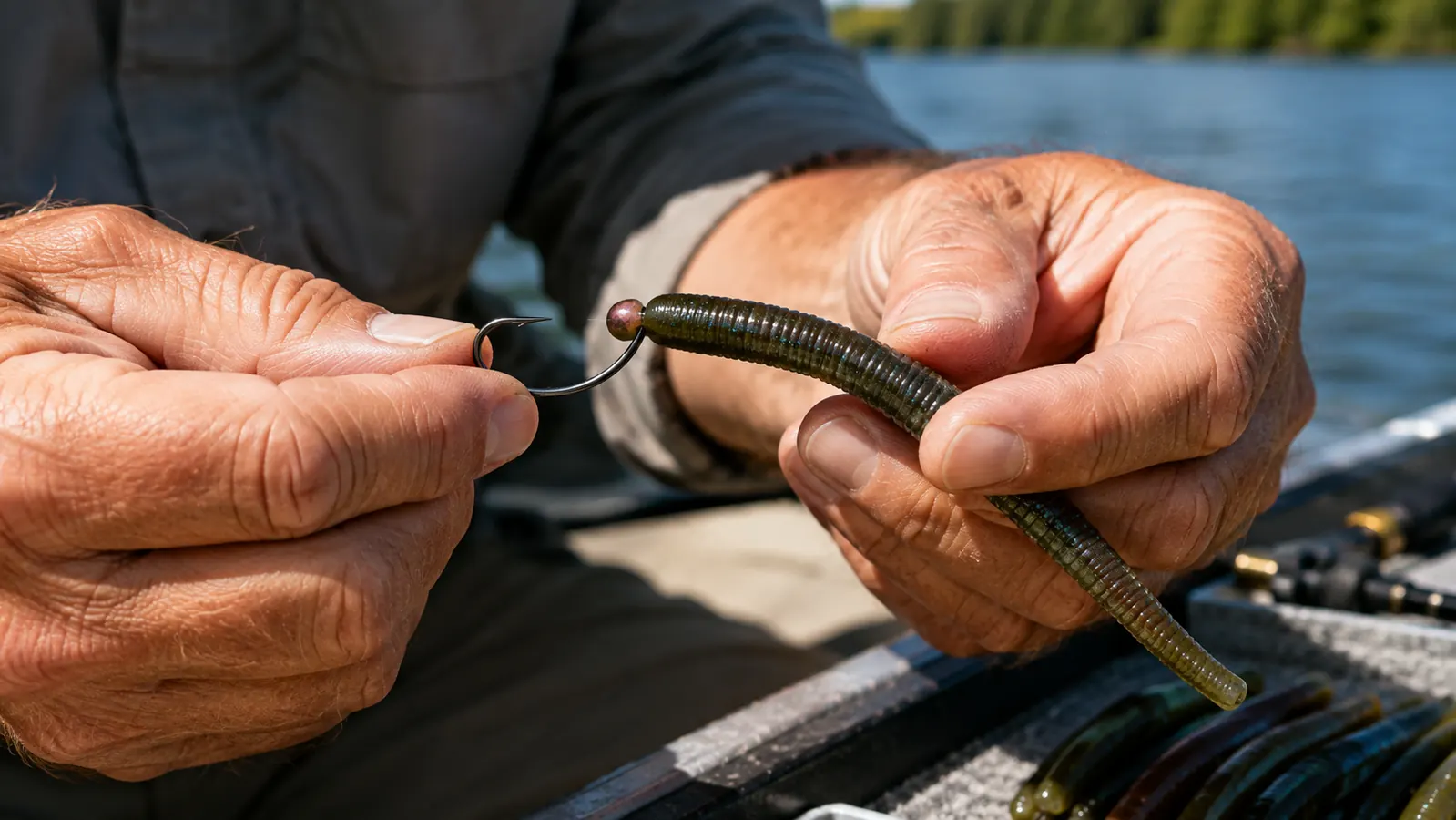
The hook is where most people get the rig wrong. You do not want a thin wire hook or a small round-bend hook under a thick PowerBait worm. I use a 3/0 or 4/0 extra wide gap worm hook, usually an offset EWG, and I am picky about it. The wide gap matters because the worm is thick. The point has to travel all the way around the bait before it can bite into a bass's jaw, and a narrow hook will not give you that room. You will lose fish and blame the bite when the hook was the problem.
Hook size has to match the worm. Too small and the plastic wads up over the eye, never sits straight, and falls in a useless corkscrew. Too big and the worm spins in the water and swims wrong. A 3/0 is my starting point for the worms in a standard PowerBait pack, and I step up to a 4/0 when I am throwing into heavier cover and want more bite on the hookset.
The offset on an EWG hook keeps the point riding up instead of flat. When the worm is rigged weedless, that little stand-off lets the point dig into a fish's jaw on the hookset instead of pushing straight through the plastic. Some straight-point hooks work fine, but I reach for the offset because it lands the hook better in a bass's mouth.
Step 2: Pick the Weight
A bullet weight does two jobs on a Texas rig. It carries the worm down to the bottom, and it gives the rig that head-first wobble on the fall that bass have a hard time leaving alone. I run anywhere from an eighth of an ounce in shallow water to three-eighths on deep points and river ledges. For most bank fishing and the lake trips I take, a quarter ounce covers more situations than anything else.
I peg the weight about six inches up the line with a small bobber stop, or a toothpick snapped off flush with the weight, so it does not slide down and pound the worm's nose on the cast. That little gap also lets the worm hang free on the fall, and the fall is when a lot of the bites come. If you want extra action, leave it unpegged and let the weight clack against the worm. Both work. I peg mine more often than not.
Step 3: Rig It Weedless, the Thread
This is the step that separates a rig that hangs up on every cast from one that slides through timber like it is not there. Take the worm and push the hook point into the nose, right at the tip, and push it through so the point pokes out the side of the worm's head. Then run the worm up the shank until the hook eye sits just inside the head, with the worm's body hanging straight down the hook.
Now comes the part everyone rushes. Turn the hook over so the point faces the worm, and bury the point back into the body, pushing it just under the skin and out the side so the point and the barb are covered but not buried deep. Run your thumb over it. It should feel smooth, no hook sticking out. That is what makes the rig weedless, and it is the whole reason you can drag a Texas rig through a brush pile, over a laydown, or along a weed line without picking up every twig in the lake.
If the worm wads or twists while you thread it, slide it off and start over. It takes three tries the first time and about thirty seconds after that. A straight worm falls straight, and a straight fall is what gets you bit. Do not try to fish a worm you rigged crooked, because it will swim sideways and you will blame the bait when it was the rigging.
Step 4: Keep the Slack Out and Set the Hook
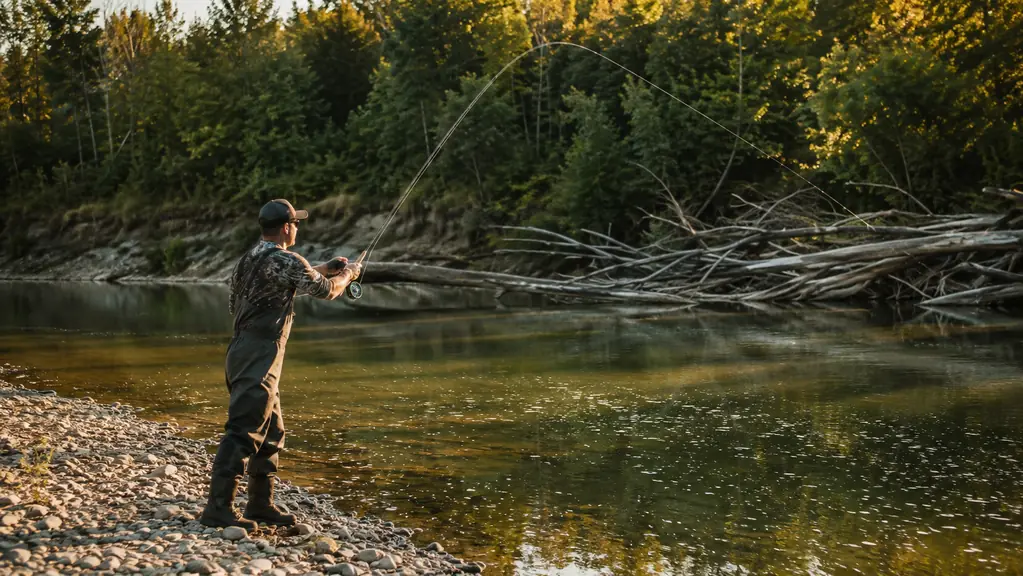
Because the point is buried in the worm, the hook has to punch through the plastic before it can reach the fish. That means you cannot set the hook the way you do on a crankbait. When you feel the tick, drop the rod tip, reel down until the line comes tight, then sweep the rod hard to the side. If you set from a slack line, the worm eats most of the force and the hook never lands. I have watched people yank into the sky and miss the same way for thirty years.
You will not always feel a smash. On a Texas rig, a lot of bites feel like a mushy tick, a sudden weight, or a line that just goes slack when it should not. Learn to trust that feeling and set on anything that is not the bottom. It is better to set on a log once in a while than to feed a bass your worm.
Sharp hooks are not optional on a weedless rig. A dull point will push the worm instead of cutting through it, and you will set the hook into nothing. I test a hook against my thumbnail and replace it the moment it stops biting in, which on my river trips works out to every couple of outings. A pack of hooks is a few bucks. A lost bass is not worth it.
Step 5: Fish It Slow, Then Slower
The Texas rig is a bottom bait, and the biggest mistake I see is fishing it like a spinnerbait. Cast past the cover you want to fish, let the worm sink on a slack line, and count it down to the bottom. Then drag it a foot or two, stop, and let it sit. Most of my bites come on that pause, when the worm is sitting still on the bottom and the fish has time to make up its mind.
This is where Berkley's PowerBait scent earns its keep. A bass that inhales a plain plastic and feels nothing wrong may spit it in a heartbeat. With the scent in the worm, bass tend to hold on longer, and that gives you the extra beat you need to feel the weight and set the hook. I have had smallmouth pick the worm up off the bottom, sit there with it, and let me reel down before they decided it was not real. That does not happen with an unscented worm.
There are days the fish want it dragged steady, and days they want it dead still. I fish the drag and pause for the first half hour, and if the bites do not come, I slow down even more and fish the worm like a dead bait. When the water is cold, slow down more. When the bass are aggressive in warm water, a slightly faster drag works. The worm does the work. You just have to let it.
What Else Helps
Line choice matters more on a Texas rig than on almost anything else I throw. I run braid when I am fishing heavy cover, because there is no stretch and you can turn a fish's head and drag it out of a laydown. On a clean bottom, I tie on a fluorocarbon leader about eighteen inches long, because the worm falls more naturally on a line the fish cannot see and the no-stretch feel gets you the tick earlier.
Keep a bobber stop or a toothpick in your box for pegging the weight, and a pair of small scissors for trimming the nose of a worm that gets ragged. When the bite slows, change the color or the weight before you change the spot. A lighter weight falls slower and hangs in the fish's face longer, and a different color can trigger a fish that has stared at the same green worm all morning.
And know when the Texas rig is the right call. It is my choice whenever there is cover in the water: laydowns, weed lines, brush piles, docks. If the water is open and clean, a wacky rig or a weightless worm gets the nod instead. The Texas rig trades a little sensitivity for the ability to fish the nasty stuff, and in the Ozarks the nasty stuff is where the bass live.
Most of my bites come on the pause, when the worm is sitting still on the bottom. The drag gets the bait in front of them. The pause is what makes them eat it.
Rig It Right and Keep It Slow
A pack of Berkley PowerBait worms is the cheapest edge in your tackle box once you can put one on a hook the right way. Thread it weedless, drag it slow, and hold on.
Amazon Check Today's Price on Amazon →